Leave Your Message

What Is IoT Lens Design and How Does It Work?

IoT Lens Designs are becoming essential as connected cameras move from smart homes into factories, farms, and transport systems. IoT Analytics reported 16.6 billion active IoT devices in 2023. Its State of IoT—Spring 2024 report projected 18.8 billion devices for 2024. More devices mean more visual data, but not necessarily better images.

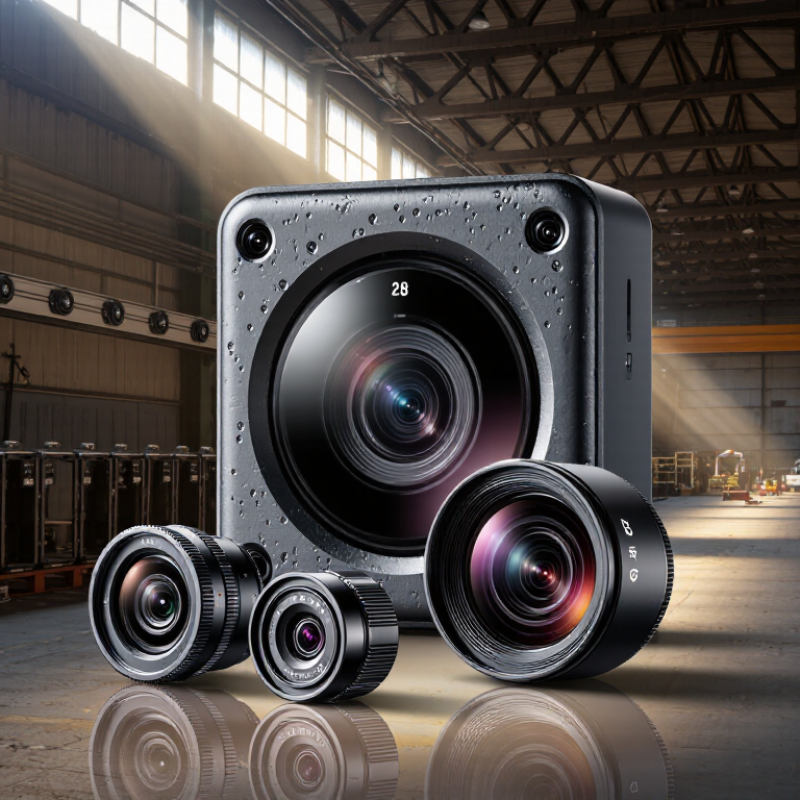
An IoT lens gathers light, controls viewing angle, and projects a focused image onto a sensor. Engineers balance focal length, aperture, distortion, infrared performance, and enclosure size. A compact 2.8 mm lens may capture a wide warehouse aisle. However, its edges can appear stretched. A narrow 12 mm lens offers more detail across a gate, but it sees less surrounding space. Small choices matter.

Rudolf Kingslake, a respected optical designer, wrote, “The design of a lens is a compromise.” That principle still guides modern IoT Lens Designs. A designer may pair an IR-cut filter with a 1/2.8-inch sensor for daytime color accuracy. Night operation may require near-infrared transmission, larger apertures, or integrated illumination. Standards such as ISO 12233 help evaluate resolution, while IEC 62676 supports image-performance assessment in surveillance applications.

This is not a perfect formula.

Real installations add dust, vibration, heat, condensation, and changing light. Field testing remains necessary. A laboratory lens chart cannot fully reproduce rain on a loading dock. This article examines how IoT lenses work, why their specifications matter, and where design assumptions can fail.
What Is IoT Lens Design and How Does It Work?

Definition and Core Principles of IoT Lens Design

What Is IoT Lens Design and How Does It Work?

IoT lens design is the process of creating optical systems for connected cameras and sensing devices. It defines how light enters a sensor, forms an image, and supports automated decisions. The 2024 State of IoT report estimates 18.8 billion connected IoT devices worldwide in 2024. More devices create stronger demand for compact, reliable lenses.

Core principles begin with field of view, resolution, focus, and light control. A wide-angle lens can monitor a warehouse aisle, while a narrow lens can inspect a meter display. Designers also manage distortion, infrared transmission, aperture, and sensor matching. Poor alignment may turn straight shelves into curved lines. Small errors matter.

Environmental durability is equally important. Outdoor lenses may face dust, rain, vibration, and sharp temperature changes. The lens must preserve image quality under these conditions. The 2024 IoT spending outlook from IDC projects global IoT investment to pass one trillion dollars by 2026. This growth increases pressure for efficient optical design, not merely cheaper hardware.

Real scenes are messier than test charts. A clean laboratory image can hide glare, fog, or moving shadows. Designers should test lenses in installation environments, then revise the optical model. That step is often underestimated. A technically sharp lens may still fail if its field of view misses the critical area. Good IoT lens design balances optical performance, processing limits, energy use, and practical maintenance.
What Is IoT Lens Design and How Does It Work? - Definition and Core Principles of IoT Lens Design

Design Dimension Typical Engineering Range or Standard Role in IoT Lens Design Core Principle
Definition Optical system optimized for connected sensing devices Combines a lens, image sensor, processing hardware, connectivity, and software to capture measurable visual data. Design the complete sensing system, not only the lens.
Field of View Approximately 30°–120° diagonal, depending on the application Determines how much of a scene is visible and affects coverage, perspective, and installation distance. Match scene coverage to the sensor and mounting position.
Focal Length Common compact-camera values: about 2.5–12 mm Controls magnification and viewing angle; shorter focal lengths generally provide wider coverage. Select focal length together with sensor size and working distance.
Aperture Typical fixed-aperture designs: approximately f/1.8–f/4 Controls the amount of light reaching the sensor and influences depth of field and low-light performance. Balance light collection, sharpness, depth of field, and physical size.
Sensor Compatibility Common compact image-sensor formats include 1/4", 1/3", 1/2.8", and 1/2.5" The lens image circle must adequately cover the sensor without excessive vignetting. Verify optical format, pixel size, active area, and lens mounting interface.
Resolution and MTF Resolution must support the sensor’s pixel pitch and the required object detail. Modulation Transfer Function, or MTF, describes how well contrast and detail are preserved at different spatial frequencies. Optimize lens sharpness across the image field, not only at the center.
Distortion Often specified as a percentage; lower values are preferred for measurement applications. Barrel or pincushion distortion changes the apparent geometry of objects and may reduce measurement accuracy. Control distortion optically or correct it through calibrated software.
Depth of Field Depends on aperture, focal length, focus distance, and acceptable circle of confusion. A larger depth of field helps connected devices keep objects at different distances in focus. Prioritize reliable focus over photographic background blur in most sensing tasks.
Infrared Performance Visible light is approximately 400–700 nm; near-infrared sensing commonly extends to about 850–940 nm. Night vision and machine-vision applications may require controlled transmission in the near-infrared range. Align lens coatings, filters, sensor sensitivity, and illumination wavelength.
Focus Method Fixed focus, manual focus, or electronically adjustable focus The choice affects installation flexibility, power consumption, mechanical complexity, and long-term reliability. Use the simplest focus mechanism that meets the required working-distance range.
Low-Light Efficiency Improved by a wider aperture, higher transmission, suitable coatings, and an appropriate sensor. Adequate photon collection reduces image noise and supports reliable analytics in dim environments. Optimize the entire optical and electronic signal path.
Environmental Protection Ingress protection ratings such as IP65 or IP67 may be selected for outdoor or industrial deployments. Sealing, materials, and mechanical stability help protect optical performance from dust, water, vibration, and temperature changes. Design for the actual operating environment and validate performance over the expected temperature range.
System Integration Lens mount, sensor interface, embedded processing, and network connection must be mutually compatible. IoT lens design supports edge analytics, remote monitoring, event detection, and data transmission while considering power and bandwidth limits. Optimize optical quality, computational workload, energy use, latency, and data value as one system.

Key Components Used in IoT Lens Systems

What Is IoT Lens Design and How Does It Work?

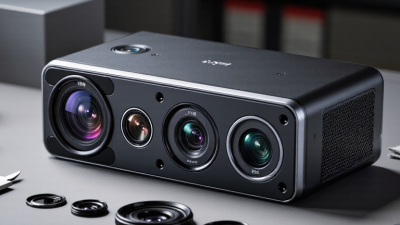
IoT lens systems combine optical parts, sensing hardware, and networked software. The lens gathers light and shapes it toward an image sensor. The sensor converts that light into digital data. A processor then adjusts exposure, color, focus, and image compression. Small changes matter. A slightly misaligned lens can create blur, glare, or uneven brightness.

Other key components support reliable operation. An aperture controls how much light enters the system. An infrared filter helps maintain natural colors under normal lighting. Some systems add infrared illumination for dark environments. A microcontroller manages local decisions, while a communication module sends selected data to a secure platform. The enclosure protects these parts from dust, moisture, vibration, and temperature changes. In practical installations, calibration is often overlooked. That mistake can reduce accuracy, especially when the lens faces reflective surfaces or changing daylight.

Tips: Test the lens at several distances and lighting levels. Check focus after mounting, not only on a workbench. Keep the sensor clean. Review data quality before increasing network traffic. It is also wise to record calibration settings and inspection dates. This creates a clearer maintenance history. Designers should balance resolution, power use, processing speed, and storage needs. Higher resolution is not always better. Sometimes, it produces larger files without useful detail. Engineers must also assess privacy safeguards and access controls before deployment. There is no perfect setup; field conditions can expose weaknesses that laboratory tests miss.

How IoT Lenses Capture, Process, and Share Data

IoT lens design begins with a simple question: what useful event should the camera detect? A compact optical system gathers light through a shaped lens and directs it onto an image sensor. Exposure, focus, and field of view determine whether a doorway, machine panel, or crop row appears clearly. In a practical installation, morning glare can wash out details. A wider view may help, but it can reduce useful detail. Design involves trade-offs.

After capture, embedded software turns pixels into measurable information. It may detect motion, count objects, read temperature displays, or recognize a change in color. The processor often filters irrelevant frames before sending anything onward. That saves energy and reduces network traffic. For example, a warehouse lens might transmit “package present” instead of streaming every second. This local processing can improve response time, yet it may miss unusual events. That limitation deserves attention.

Useful data then moves through a protected connection to a dashboard, control system, or approved application. Reliable designs use access controls, encryption, accurate timestamps, and clear retention rules. Operators should know what the lens captures, why it captures it, and when data disappears. A failed connection should not silently create false confidence. Testing under dust, vibration, weak signals, and changing light reveals more than a clean laboratory setup. The lens is helpful, but never perfectly objective.

IoT Lens Data Flow: Uncompressed Payload per 1-Megapixel Frame

An IoT lens system captures light with an image sensor, processes pixel values, and shares the resulting data through a connected device. This chart shows the uncompressed payload size for one 1,000,000-pixel frame at common pixel formats. The values are calculated from pixel count multiplied by bytes per pixel, before compression or transmission overhead.

Design Considerations for Accuracy, Connectivity, and Power Use

What Is IoT Lens Design and How Does It Work?

IoT lens design connects optical accuracy with connectivity and power limits. A lens must capture clear details under changing light, motion, and temperature. Engineers examine field of view, focal length, distortion, glare, and modulation transfer function. A wider view may cover more space, but it can reduce edge sharpness. Small sensors also need efficient optics. Poor alignment can create blurred corners, even when the center looks excellent.

The scale is substantial. IoT Analytics reported about 18.5 billion connected IoT devices in 2024. GSMA Intelligence projects nearly 29 billion IoT connections by 2030. This growth increases pressure on compact cameras and sensors. Lens coatings can improve light transmission, reducing the exposure time needed. Lower exposure demand may support longer battery life. However, optical improvements cannot fix weak wireless design. Antenna placement, data compression, and sleep intervals also affect energy use. A perfect lens is not enough.

Tips: Test the lens inside its final enclosure. Plastic covers can add reflections and soften details. Measure images at the center and edges. Test bright sunlight, dim rooms, and rapid movement. Record current draw during capture and transmission. Specifications can look impressive. Field conditions may disagree. Revising the design after testing is often wiser than defending an early assumption.

Applications and Future Developments of IoT Lens Technology

IoT lens design combines optical sensing, image processing, wireless communication, and compact hardware. A lens captures visual data, while embedded sensors measure light, distance, motion, or temperature. The device then converts these signals into useful information for connected systems. Good designs need sharp images, low energy use, stable calibration, and protection from dust or moisture.

Tips: Match the lens to its environment. Wide-angle optics suit room monitoring, while narrow views work better for gates or production lines. Test performance under glare, darkness, rain, and vibration. Small optical errors can create unreliable alerts. Do not trust laboratory results alone.

IoT lens technology already supports smart agriculture, traffic observation, warehouse monitoring, healthcare assistance, and building security. In agriculture, cameras can identify dry leaves or uneven growth. In warehouses, vision systems can detect empty shelves and misplaced packages. Future designs may combine edge computing with machine learning, reducing cloud delays and network costs. Lenses may also become smaller, more adaptive, and better at seeing infrared or depth information. Privacy-aware processing will become more important as cameras enter homes and public spaces. Local data analysis can help, but it is not automatically risk-free. Incorrect training data may still produce biased decisions. Engineers should document testing conditions, update models carefully, and provide human review for uncertain results. Reliability is built through repeated field testing, not attractive specifications.