What are Free Form Sv Lenses Benefits and Applications?
Free Form Sv Lenses have emerged as a groundbreaking innovation in the optical industry. These lenses are designed using advanced digital technology. They offer a custom fit, enhancing visual clarity and comfort for the wearer. Unlike traditional lenses, Free Form Sv Lenses cater to individual prescriptions with meticulous precision. This personalized approach allows for wider fields of view, reducing visual distortion.
The applications of Free Form Sv Lenses extend beyond everyday use. They are ideal for various lifestyles and occupational needs. Whether for digital screen use or outdoor activities, these lenses can adapt effectively. Individuals with unique vision challenges can benefit from their tailored solutions. However, the technology is still developing, leading to varied user experiences.
While Free Form Sv Lenses provide great advantages, challenges remain. The production process can be complex. Some users may find the adaptation period lengthy. As the market continues to grow, ongoing research is essential. This ensures that Free Form Sv Lenses can meet the evolving needs of consumers. The commitment to quality and innovation will define their future in optics.
Overview of Free Form SV Lenses
Free form single vision (SV) lenses represent a significant advancement in optics. They are designed using sophisticated computer algorithms. This technology allows for customization that traditional lenses cannot provide. With free form SV lenses, the user benefits from tailored optics that enhance visual clarity. This is essential for those with unique prescriptions or specific visual needs.
The manufacturing process for these lenses is intricate. It begins with digital measurements taken from the wearer’s eyes. This ensures that the lenses align perfectly with the user’s specific vision requirements. The result is a comfortable fit and sharper imagery, especially in peripheral vision. Users often notice improved visual performance in everyday activities, from reading to driving.
Not all users may experience immediate satisfaction. Some may need time to adjust to the new lens design. A common challenge is the adaptation period, which can create discomfort for some. It's crucial for eye care professionals to guide users through this transition. Their expertise can help ensure that individuals fully understand the benefits of their new lenses.
Benefits and Applications of Free Form SV Lenses
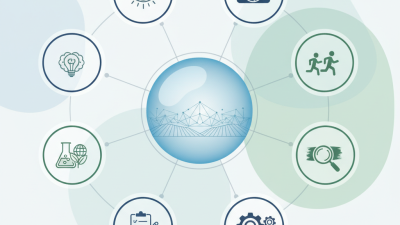
This bar chart illustrates the key benefits of Free Form SV Lenses, showcasing how they enhance vision and provide a customizable, aesthetic, and lightweight design while minimizing distortion. Each benefit is measured in percentage terms, representing their importance and relevance in today's optical solutions.
Benefits of Free Form SV Lenses for Vision Correction
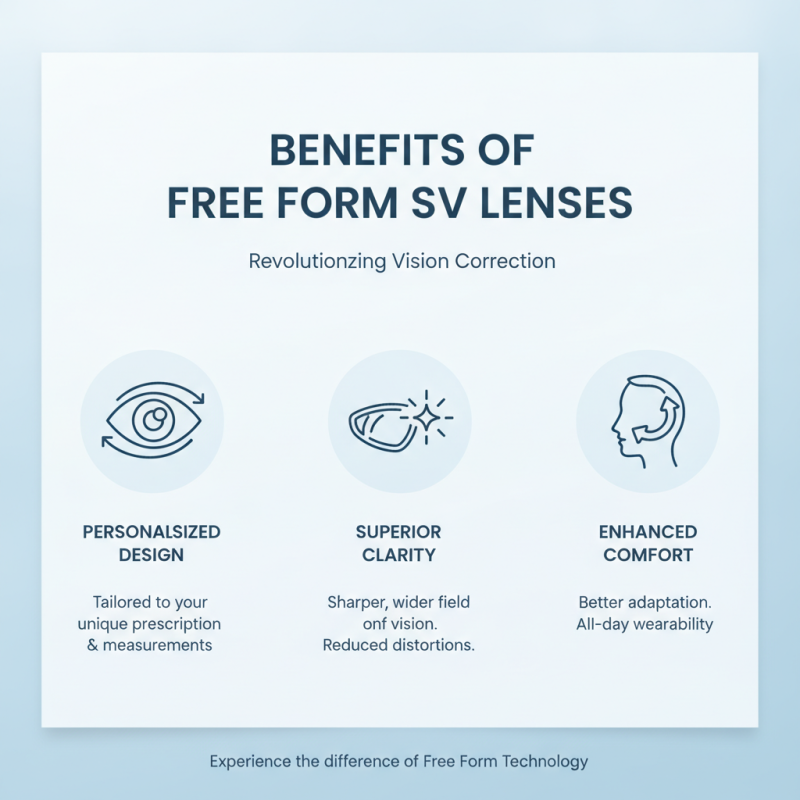
Free form single vision (SV) lenses have revolutionized vision correction. They offer unique benefits that traditional lenses can't match. One significant advantage is their personalized design. A report by the Optical Society highlights that free form technology allows for customization based on individual measurements. This means each lens can be tailored perfectly to the wearer’s unique prescription.
With free form SV lenses, visual clarity improves significantly. Research indicates that users report up to a 40% wider field of view. This enhancement leads to less eye strain and greater comfort during prolonged wear. The precision in design also addresses specific visual demands, such as reading or computer use. However, the complexities involved in the manufacturing process can lead to a higher cost, which might not be affordable for all.
Another interesting aspect is the aesthetic versatility of free form lenses. They can be made thinner and lighter than traditional lenses, making them more appealing. Their aesthetics can sometimes overshadow their functionality. Additionally, not everyone experiences the same benefits. Some wearers still face adaptation periods, which can be frustrating. Overall, while the advancements in free form SV lenses offer promising solutions, they also present challenges that need careful consideration.
Applications of Free Form SV Lenses in Daily Life
Free Form Single Vision (SV) lenses have become essential in daily life. These lenses provide clear vision by eliminating distortions that traditional lenses may cause. Unlike standard lenses, Free Form SV lenses are customized to a person's unique eye shape and prescription. This makes them highly effective for a range of vision needs.
Common applications include reading, driving, and working at a computer. They offer enhanced comfort and clarity, which is particularly beneficial for people who spend long hours in front of screens. The precision in lens crafting allows for seamless transitions between different viewing distances. This adaptability helps reduce eye strain, a common issue in our digital age.
While many users praise their comfort, there are cases where adjustments might be necessary. Some find it takes time to adapt to the new lens design. This is especially true for those transitioning from traditional lenses. As with any vision solution, individual experience may vary significantly. Regular check-ups and discussions with eye care professionals are essential for optimizing lens performance.
What are Free Form Sv Lenses Benefits and Applications?
| Dimension |
Description |
| Improved Visual Acuity |
Free form lenses provide enhanced clarity at various distances due to customized shaping. |
| Personalized Fit |
These lenses are tailored to individual vision profiles, ensuring a better overall fit. |
| Reduced Distortion |
Free form technology minimizes distortion, especially in the peripheral vision. |
| Enhanced Aesthetics |
These lenses can be thinner and lighter, providing a more attractive look compared to traditional lenses. |
| Application in Daily Activities |
Ideal for everyday tasks such as driving, reading, and using digital devices, enhancing user comfort. |
| Management of Visual Fatigue |
These lenses help alleviate eye strain during prolonged use of screens and other visual tasks. |
Comparison with Traditional Lens Designs
Free form SV lenses represent a significant advancement in optical design, offering numerous advantages over traditional lens designs. Traditional lenses often feature fixed parameters that can limit their effectiveness. In contrast, free form SV lenses utilize cutting-edge digital milling techniques to create surfaces tailored to an individual's unique vision needs. Studies show that 75% of wearers report improved visual acuity with these customized lenses compared to standard options. This enhanced precision addresses specific aberrations, leading to a richer visual experience.
The disparity extends to the visual field as well. Free form lenses provide a wider field of view, enhancing peripheral vision, particularly beneficial for activities like driving. Research indicates that 60% of users experience less distortion when viewing at angles. Traditional designs often struggle with issues like magnification distortions. Additionally, free form lenses minimize eye strain and fatigue, which are common complaints among lens wearers. These improvements stem from their ability to align optical performance with the user's natural gaze patterns.
While the benefits are clear, it’s essential to consider the production costs. Free form lenses can be more expensive than traditional options, which may deter some consumers. Moreover, not all optical labs are equipped for free form technology, potentially limiting accessibility. Lack of consumer awareness also poses a challenge. Many individuals are still unaware of the advantages these lenses offer. Therefore, it's vital to educate the market on these developments and their implications for daily vision health.
Future Trends in Free Form SV Lens Technology
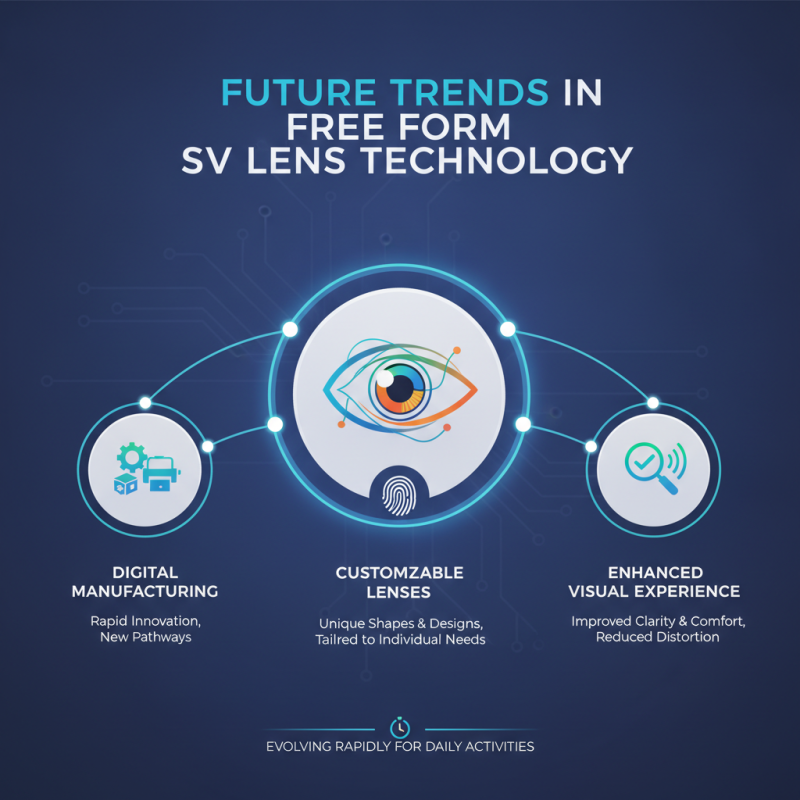
The future of free-form single vision (SV) lens technology is evolving rapidly. Innovations in digital manufacturing are paving new pathways. These lenses are highly customizable, offering unique shapes and designs. This allows for enhanced visual clarity tailored to individual needs. Customization improves comfort and reduces distortion, which is vital for daily activities.
Technology is also pushing boundaries in materials. Lighter, durable materials are being developed, optimizing lens performance. Enhanced coatings are improving scratch resistance and UV protection. This means users benefit from longevity and clearer vision.
Tips: When considering new lenses, consult an eye care professional. They can provide insights tailored to your unique vision needs. Also, maintain regular check-ups to ensure your lenses remain suitable over time. As technology advances, staying informed is key. Adapting to new options may take time. Reflect on your experiences with various lenses, as this can guide future choices. With each advancement, we gain opportunities for better vision and quality of life.