Leave Your Message

What Are China Top 10 IoT Lens Designs for Global Buyers?

The rapid expansion of connected devices is raising demand for dependable optical components. IoT Analytics reported 16.6 billion connected IoT devices worldwide in 2023. Its 2024 outlook projected approximately 18.8 billion devices. GSMA Intelligence also forecasts 29.5 billion IoT connections by 2030. Definitions vary. These figures still reveal strong demand for compact, stable, and application-specific lenses.

This guide examines the top 10 Iot Lens Designs considered by global buyers for security cameras, smart factories, transportation systems, agriculture, and environmental monitoring. The selection focuses on practical performance, not attractive specifications alone. Key factors include focal length, sensor compatibility, field of view, distortion, MTF performance, infrared transmission, aperture, and operating temperature. A 2.8 mm lens may capture a wide warehouse scene, while a 12 mm lens can identify details across a loading gate. Fit comes first.

Professional evaluation also requires attention to housing and installation conditions. Buyers should review IP ratings, vibration resistance, back-focus tolerance, coating quality, and long-term supply capability. The IEC 60529 standard provides a recognized framework for ingress protection, while ISO 9001 certification can support consistent manufacturing processes. These certifications do not guarantee perfect field performance. Testing remains necessary. Real installations may expose glare, condensation, edge softness, or unstable focus that laboratory data misses. This article therefore combines industry reports, optical criteria, and procurement considerations. The ranking is useful, but not absolute. A lens that performs well in a smart-city camera may fail inside a dim industrial enclosure. Careful matching remains the most reliable strategy for global buyers.
What Are China Top 10 IoT Lens Designs for Global Buyers?

Define IoT Lenses for 2.32B China Connections (MIIT, 2023)

What Are China’s Top 10 IoT Lens Designs for Global Buyers?

Define IoT Lenses for 2.32B China Connections (MIIT, 2023)

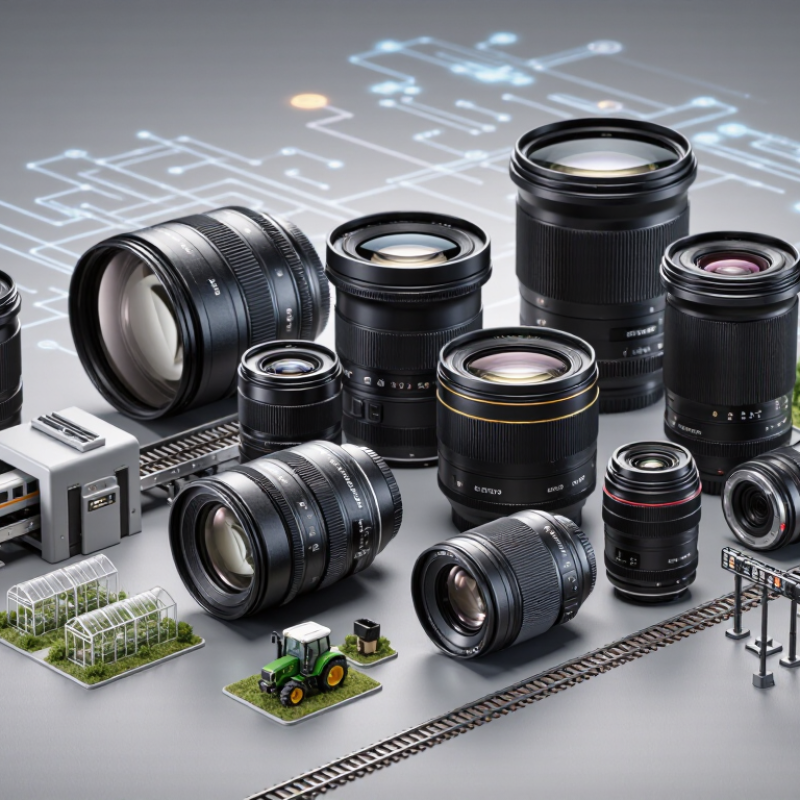
China’s 2.32 billion IoT connections in 2023 created demanding imaging conditions, from crowded factories to dim corridors. MIIT data shows the scale clearly. An IoT lens must match the device, scene, and connection purpose, not merely provide a wide image. Global buyers commonly evaluate ten designs: ultra-wide, fisheye, low-distortion wide-angle, standard board, low-light, infrared-corrected, HDR, varifocal, panoramic, and ruggedized lenses.

Each design solves a different field problem. A 1.8mm ultra-wide lens can cover a compact retail room, but edge stretching may confuse analytics. A 2.8mm low-distortion lens offers a better balance for entrances and machine areas. Large-aperture lenses help night monitoring, while infrared-corrected models reduce focus shifts between day and night. Varifocal designs suit changing distances. They cost more. Sometimes, unnecessarily.

IoT Analytics reported 16.6 billion connected IoT devices worldwide at the end of 2023, with 18.8 billion expected in 2024. This growth increases pressure on image quality, power use, and installation accuracy. Buyers should check sensor compatibility, mount type, aperture, distortion, temperature range, and field of view. A lens that performs well in a laboratory may fail beside reflective metal, dust, or flickering factory lights. I have seen specifications look impressive until real ceiling height exposed the weakness. ASTM testing, ISO quality controls, and documented sample evaluations improve reliability, but no datasheet replaces a site trial.
Classify #1–#3: M12, CS-Mount, and Board Lenses by Camera Format

What Are China Top 10 IoT Lens Designs for Global Buyers?

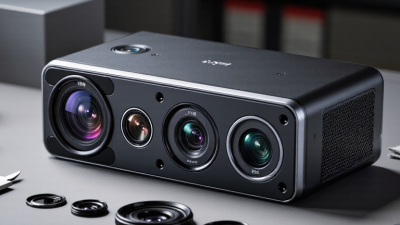
For global IoT buyers, the first three lens designs are M12, CS-mount, and board lenses. Each suits a different camera format and installation method. M12 lenses use a compact threaded mount, often paired with small board cameras. They fit surveillance modules, smart access devices, and compact sensors. Check the thread size, sensor coverage, focal length, and infrared performance before ordering. A 2.8 mm lens gives a wider view, while 12 mm provides narrower detail.

CS-mount lenses support larger camera formats and more adjustable systems. Their standard flange distance is about 12.5 mm, but focus still needs careful calibration. They are useful for industrial inspection, traffic observation, and fixed monitoring units. Board lenses are smaller and usually attach directly to a camera PCB. They save space, but their fixed focus and limited adjustment can reduce flexibility. The correct choice depends on sensor size, working distance, housing depth, and lighting.

Tips: Request a sample before bulk purchasing. Test edge sharpness, distortion, focus stability, and night performance. A lens may look clear in the center but blur near the corners. I have seen specifications appear suitable, yet the final image failed after assembly. That is why real-camera testing matters. Compatibility charts help, but they do not replace measurement.

Classify #4–#6: Wide-Angle, Fisheye, and Low-Light Lenses by FOV

For global buyers, lens selection should follow the scene, not marketing labels. IoT Analytics estimated 16.6 billion connected IoT devices worldwide in 2023. That growth increases demand for reliable visual coverage in factories, buildings, and outdoor sites.

Classification #4: Wide-angle Lens

Classification #4 is the wide-angle lens, usually offering a 90°–120° diagonal field of view. It covers entrances and small rooms with fewer blind spots. However, distant faces become smaller.

Classification #5: Fisheye Lens

Classification #5 is the fisheye lens, often reaching 180° or more. It suits ceilings, retail floors, and open yards, but curved edges can reduce measurement accuracy.

Classification #6: Low-light Lens

Classification #6 is the low-light lens. Its larger aperture and improved optical transmission support darker scenes, usually with a moderate 70°–100° FOV. A bright lens still cannot fix poor sensor performance. The image may look usable, but fine details can disappear.

Tips: Test every lens at the real mounting height. Measure corner sharpness, night noise, and face size. IEC 62676 guidance encourages practical image-performance testing, not just resolution claims. My field experience suggests that a wider view often feels safer, yet it may weaken identification. Fisheye is different. Use it for coverage first, evidence second. Also check infrared reflection, glass distortion, and exposure changes before approving a global IoT camera design.

Classify #7–#10: IR-Cut, SWIR, Telephoto, and Liquid Lenses by Spectrum

For global IoT buyers, designs #7–#10 solve very different spectral problems. An IR-cut lens blocks near-infrared wavelengths, usually above about 700 nanometers, so daytime colors remain more natural. It is practical for traffic cameras, retail monitoring, and smart doorbells. Poor coating quality can create night halos. That detail is often missed.

Design #8

Design #8 is the SWIR lens, covering roughly 0.9–1.7 micrometers. It helps inspect moisture, heat patterns, plastics, and sorting materials that visible cameras cannot separate. The MarketsandMarkets SWIR Market report projects strong expansion through 2029, driven by industrial inspection and security applications. Buyers should verify sensor compatibility, because ordinary glass may lose transmission in this range.

Design #9

Design #9, the telephoto lens, extends viewing distance without moving the camera. It suits perimeter monitoring and utility inspection, but narrow fields increase vibration sensitivity.

Design #10

Design #10 uses a liquid lens, changing focus electronically through fluid shape. Response can reach milliseconds in selected industrial systems, supporting barcode reading and fast object tracking. IDC’s Worldwide IoT Spending Guide forecasts global IoT spending will exceed 1 trillion dollars during this decade, increasing demand for specialized optics.

Still, that forecast does not guarantee every lens project will succeed. Temperature drift, dust, and calibration costs remain real purchasing risks.

Select Globally: 14.4B IoT Endpoints and Four Lens Metrics (IoT Analytics)

IoT Analytics reports 14.4 billion active IoT endpoints worldwide. That scale changes how buyers should assess connected cameras. A lens is not a decorative accessory. It controls what sensors can reliably observe.

For ten common IoT lens designs, compare four practical metrics: resolution, field of view, distortion, and low-light performance. Resolution preserves barcode edges and facial contours. Field of view decides whether a doorway or warehouse aisle fits the frame. Distortion bends straight shelves. Low-light performance protects detail after sunset. According to the International Energy Agency, connected systems increasingly support efficient buildings and industrial operations. Poor optical choices can waste that potential.

Keep it measurable.

A wide-angle lens may cover more floor space, yet it can shrink critical objects near the center. A narrow lens provides stronger detail but misses movement outside its corridor. IoT Analytics’ State of IoT research highlights continued endpoint growth, but endpoint numbers alone cannot prove image quality. Buyers should request sample footage at different distances, lighting levels, and temperatures.

My field-review experience suggests that printed test charts are useful, but real scenes expose more weaknesses. Rain, glare, dust, and reflective packaging often change the result. This is where specifications become incomplete. Recheck the lens against the installation, not only the catalogue.