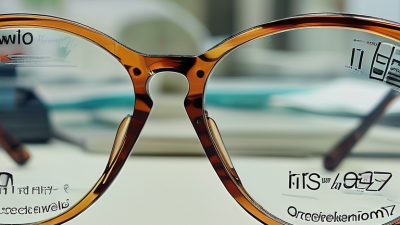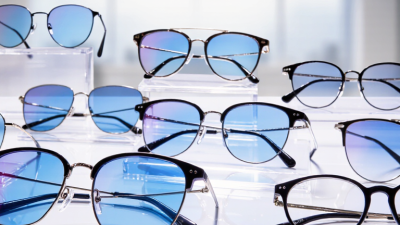
Global buyers evaluating Lente Multifocal Freeform suppliers need more than a competitive quotation. They need consistent lens quality, dependable production controls, and clear communication across time zones. Freeform processing can customize lens geometry using prescription data and fitting measurements. Yet advanced equipment alone does not guarantee reliable results. Buyers should ask how suppliers check design files, manage coating options, and inspect finished lenses. Sample pairs and written specifications can help verify whether stated capabilities match actual production. Small details matter: edge quality, protective packaging, and readable labels affect receiving and dispensing workflows.
A practical supplier review should also cover technical support, order tracking, lead times, and procedures for handling remakes. Ask whether the supplier can provide relevant quality documentation and explain how each order is traced. Confirm which measurements and fitting parameters the supplier needs before production begins. Some claims sound polished. Ask for evidence. Compare responses carefully, since a low price may not include the support or customization your market requires. No checklist is perfect. Even so, testing a sample order can expose gaps before larger commitments are made. The right partner is not necessarily the largest supplier; it is one whose capabilities, communication, and quality controls fit your buyers’ needs.
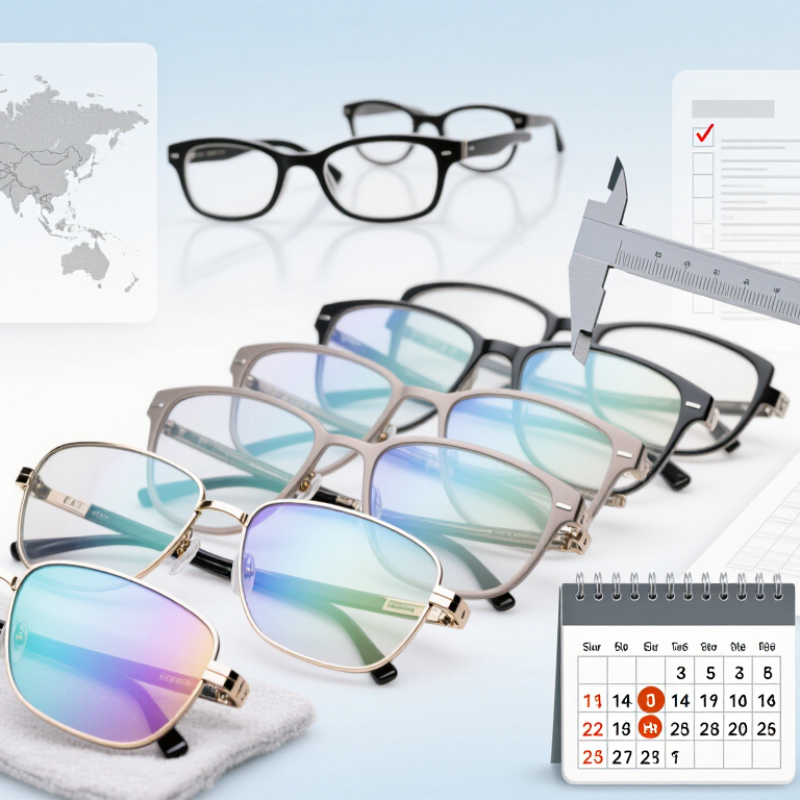
For global buyers, freeform multifocals are best compared through three measurable specifications: addition power, corridor length, and prescription range. Addition power describes the near correction added to the distance prescription. Confirm that the available add steps match the prescriptions your customers commonly order. A catalog range alone is not enough; ask how powers are distributed across that range.
Corridor length affects how quickly a wearer moves from distance vision to near vision. Shorter corridors may suit compact frames, but they can require more precise fitting and adaptation. Longer corridors provide a more gradual transition, though they need sufficient lens height. Rx range also matters. Check sphere, cylinder, axis, and prism limits, and ask whether stated limits apply across every addition power. They may not. Request a clear specification sheet and test representative prescriptions before placing a large order.
Tips: Compare the same frame size and fitting height across suppliers. Verify sample lenses against the supplied measurements. Keep records of edge thickness and wearer feedback; one awkward fit can reveal a gap in your selection criteria.

For freeform multifocal lenses, index affects thickness and weight, but it does not determine optical quality alone. Typical choices are 1.50, 1.60, 1.67, and 1.74. A 1.50 lens is often economical, yet can look thicker in a strong minus prescription. Higher indices can reduce edge thickness, especially when the frame is large. The final result also depends on prescription, lens diameter, frame shape, and fitting measurements. ISO 8980-1:2017 sets optical and dimensional requirements for finished spectacle lenses; it does not identify one index as best for every wearer.
At 1.60, many prescriptions achieve a practical balance between thickness and cost. Indices of 1.67 and 1.74 may help with stronger prescriptions, but they can reflect more light at the lens surface. Anti-reflective coating can improve comfort and appearance. Still, index alone cannot promise a thin lens. In freeform multifocals, accurate fitting height and pupillary-distance measurements remain essential for positioning the viewing zones. Small measurement errors matter.
Tips: Compare finished-lens thickness estimates using the actual prescription and frame dimensions. Ask for the material’s refractive index and Abbe value; the latter relates to color fringing. ISO 13666:2019 provides standardized ophthalmic-lens terminology, useful when comparing specifications. If the frame is oversized, reconsider it. That detail is easy to miss.
For global buyers, a supplier’s ISO 8980-2 claim should lead to test evidence, not a checkbox. The standard addresses power-variation lenses, including progressive designs. Ask which edition and lens category the supplier used, then check that its report matches the ordered design and nominal powers. A certificate alone is not enough.
Request measurements at the specified reference points, with the lens layout and test conditions recorded. For freeform multifocals, ask how distance power, addition power, and unwanted astigmatism are checked across the usable zones. The report should identify the instrument, calibration status, and measurement uncertainty. Small setup differences can affect results. That detail matters. Compare sampled lenses with the supplier’s declared tolerances, and have an independent laboratory repeat checks when risk or order volume warrants it. Keep the marking and centration data with each sample; otherwise, a good reading may refer to the wrong point. One caveat: a neat map is not proof of comfort in every wearer. Review repeatability, investigate borderline readings, and document exceptions rather than hiding them.
Supplier qualification scorecard for anonymous evaluations. ISO 8980-2 covers progressive power lenses; confirm the applicable edition, lens category, measurement points, and acceptance limits in the controlled standard and purchase specification. No supplier-specific performance data is assumed.
| Evaluation Dimension | What to Verify | Evidence to Request | Acceptance Basis | Assessment Status |
|---|---|---|---|---|
| Standard and specification control | The supplier identifies the ISO 8980-2 edition and the progressive lens product specifications used for each order. | Controlled specification, edition reference, and order-level conformity statement. | The agreed edition and product requirements are documented and consistent across the order and test records. | Pending supplier evidence |
| Back vertex power variation | Measured back vertex power at the applicable reference points, including the distance portion where specified. | Lensometry or focimetry results showing measured values, reference points, instrument identification, and test conditions. | Results meet the tolerances applicable to the lens type and power range in the agreed standard and purchase specification. | Pending test records |
| Addition power | The measured near addition is checked at the prescribed near reference point and compared with the ordered addition. | Order-to-test comparison identifying nominal addition, measured addition, and measurement location. | The measured addition falls within the applicable ISO and contractual tolerance for that lens. | Pending test records |
| Reference-point and marking control | Permanent or temporary markings allow the prescribed reference points and measurement locations to be identified correctly. | Marking diagrams, verification records, and sample-lens inspection results. | Reference points are identifiable and measurements are taken at locations defined by the applicable specification. | Pending process evidence |
| Measurement equipment | Instruments are suitable for progressive lenses and maintained with documented calibration or verification. | Equipment list, calibration certificates, verification intervals, and operator instructions. | Equipment status is current, measurement methods are documented, and records are traceable to the instrument used. | Pending calibration records |
| Freeform process consistency | The supplier controls the design file, surfacing parameters, equipment setup, and process changes that can affect delivered power. | Process-control plan, revision history, change-control procedure, and batch inspection data. | Production and inspection records correspond to the approved design and current process revision. | Pending process audit |
| Sampling and inspection records | Sampling plans and inspection frequency are defined for incoming materials, in-process checks, and finished lenses. | Written sampling plan, lot inspection reports, and representative measurement data. | The documented plan meets the buyer’s agreed risk and lot-release requirements; results are retained by lot. | Pending quality records |
| Traceability and conformity documentation | Each shipment can be linked to its production lot, lens design, test results, and release decision. | Sample certificate of conformity, lot code format, and record-retention policy. | Records identify the shipped product and provide objective evidence of the agreed power checks. | Pending document review |
| Nonconformance and corrective action | Out-of-tolerance results are contained, investigated, corrected, and checked for recurrence. | Redacted nonconformance and corrective-action examples, disposition rules, and response-time commitments. | Documented containment and root-cause actions are available; affected lots are traceable and dispositioned. | Pending quality-system review |
Buyer note: Treat “pending” as unverified, not as a failure or a pass. Set numerical acceptance limits from the applicable controlled edition of ISO 8980-2 and the agreed product specification; request actual, lot-linked measurements before ranking suppliers.
Compare suppliers by more than their design catalog. A strong portfolio should cover varied corridor lengths, frame styles, prescription ranges, and fitting parameters. Ask how designs are selected for different wearer needs. Request sample lenses or anonymized fitting examples, then check edge thickness, near-zone access, and adaptation feedback. A polished catalog alone proves little.
Production capacity matters when orders grow or seasons shift. Ask for typical lead times, monthly output ranges, and quality checks between production batches. Confirm whether custom engraving, materials, coatings, or packaging can be handled consistently. Suppliers may quote impressive volumes, but usable capacity can change with order complexity. It is worth asking for realistic timelines in writing.
Tips: Compare like with like. Share the same sample prescription and frame data with each supplier. Check customization limits before requesting a quote, and ask how changes affect delivery time. No supplier fits every workflow. Keep a small trial order in your evaluation, even when the first samples look convincing.
Global buyers should compare more than quoted delivery days. The World Bank’s Logistics Performance Index 2023 assessed 139 economies across six areas, including customs, infrastructure, and timeliness. For a freeform lens order, ask suppliers for recent production and shipping ranges, not just an ideal estimate. Confirm when the clock starts: after payment, prescription verification, or approval of fitting parameters? Small details matter. A delayed fitting-data check can hold an otherwise finished order.
Check whether quality certificates cover the actual production site and relevant processes. ISO 13485 is a useful quality-management reference, but a certificate alone does not establish product performance. Request traceability details, inspection criteria, and sample documentation for coatings and design options. Pricing should separate lens design, material, coating, edging, freight, and possible remake charges. Compare like with like. The World Health Organization’s World Report on Vision (2019) estimated that at least 2.2 billion people have near or distance vision impairment, underscoring the importance of dependable access to vision correction. After-sales support should include a named contact, a clear response window, and written procedures for remakes or prescription-related issues. I would still test those promises with a small pilot order; supplier brochures rarely reveal every handoff problem.