Leave Your Message

Top 10 Blue Cut Progressive Lenses for Global Buyers?

Choosing a Blue Cut Progressive Lens involves more than comparing coatings or advertised features. Global buyers must weigh prescription range, corridor design, frame dimensions, material options, and supplier consistency. A lens that feels comfortable in a showroom may behave differently in a wide frame or under bright office lighting. Small details matter. So does clear product documentation.

This guide introduces ten options for buyers comparing lens designs and suppliers across markets. It looks at practical factors: near-to-distance transitions, blue-light filtering claims, customization, quality controls, and communication about fitting parameters. Blue filtering alone does not guarantee visual comfort, and progressive performance depends on accurate measurements and individual adaptation. That deserves a closer look.

A careful shortlist can help opticians, distributors, and eyewear brands ask better questions before placing orders. Seek measurable specifications, sample lenses, and support for fitting and troubleshooting. No verified expert name or quotation was supplied for this topic, so I will not invent an attribution. The comparisons should still be useful, but rankings can only be as reliable as the evidence behind them.
Top 10 Blue Cut Progressive Lenses for Global Buyers?

What Blue-Cut Progressive Lenses Are and How They Work

Blue-cut progressive lenses combine two optical functions in one prescription.
They correct distance, intermediate, and near vision across a gradual lens design. They also reduce selected portions of short-wavelength visible light.

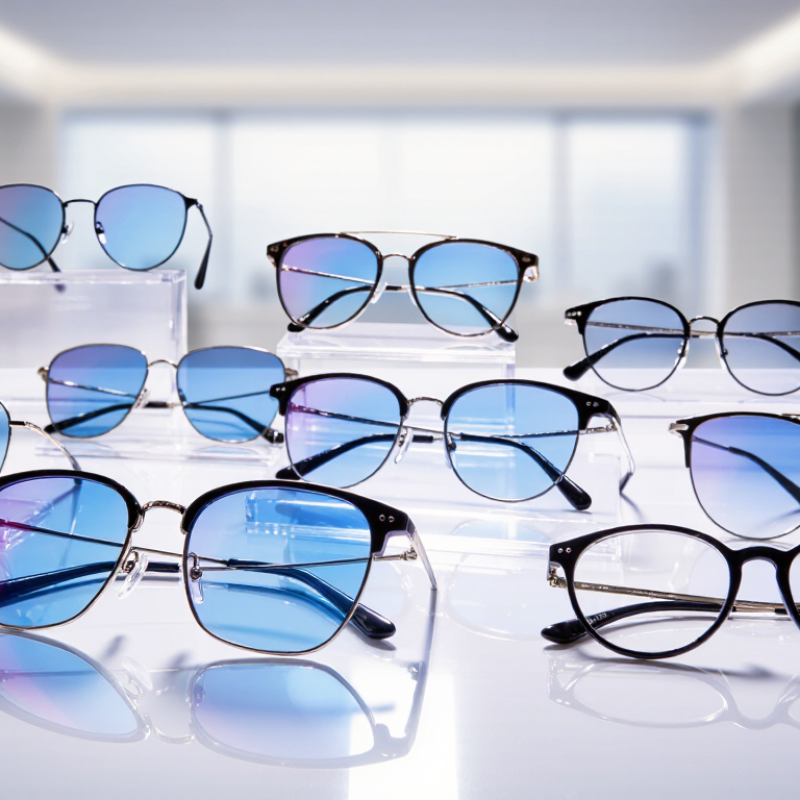
A blue-cut layer may be built into the lens material or applied as a surface coating. Depending on the design, it can absorb or reflect part of the blue-violet spectrum. The effect is usually visible as a faint blue reflection under office lighting.

It does not block all blue light, and it should not be described as a complete protection system.

The progressive structure creates different viewing zones. The upper area supports distance vision, the middle area helps with computer screens, and the lower area supports reading.

The upper area supports distance vision
The middle area helps with computer screens
The lower area supports reading

These zones are blended, so side areas may feel distorted during the first few days. Accurate measurements matter. Pupillary distance, fitting height, frame position, and working distance all influence comfort.

In practice, a wearer may notice softer screen glare during a long evening session. Results vary. Some people feel less visual fatigue, while others notice little change.

Blue-cut lenses cannot correct poor lighting, dry eyes, or an unsuitable prescription. They may also change color perception slightly, which matters for design, photography, and technical work.

A careful eye examination and honest discussion of screen habits remain more useful than choosing a filter by appearance alone.

How Progressive Vision Zones and Blue-Light Filtering Are Combined

Progressive lenses combine three viewing zones in one surface: distance at the top, intermediate vision in the middle, and reading vision below. Blue-light filtering is added through the lens material or coating, depending on the supplier’s design. For global buyers, the real challenge is balance. A strong filter may slightly change color perception, especially under warm indoor lighting. Not every wearer notices this equally.

Accurate measurements matter more than attractive specifications. Pupillary distance, fitting height, frame position, and prescription must match the wearer’s daily habits. Someone working with a laptop needs a comfortable intermediate corridor. A frequent driver needs a stable distance zone and clear side vision. In my experience, small fitting errors can feel more disruptive than the filtering feature itself. Early adaptation may still include brief blur or head movement. That is normal, but it deserves monitoring.

Tips: Ask for corridor length, filtering range, color impact, and coating durability. Request sample images under daylight and office lighting. Confirm whether the lens design suits the intended frame size. A wider reading zone can help, but it may reduce space elsewhere. This is where product testing becomes useful. One design rarely fits every face, prescription, or work routine. Suppliers should document measurements, material data, inspection steps, and adaptation support clearly. Claims should remain evidence-based. Personal comfort can be subjective, and that limitation should not be hidden.

Key Factors Global Buyers Consider When Choosing Lenses

Top 10 Blue Cut Progressive Lenses for Global Buyers?

Global buyers usually begin with prescription accuracy, not marketing claims. The World Health Organization reports that at least 2.2 billion people have near or distance vision impairment. This creates strong demand for reliable progressive correction. Buyers should check pupillary distance, fitting height, corridor design, lens material, and frame compatibility. Small measurement errors can cause blur or adaptation problems. Experienced opticians know that digital measurements still require careful face-to-face verification.

Blue-cut performance needs cautious evaluation. A 2023 Cochrane review examined 17 randomized trials and found no clear short-term reduction in digital eye strain compared with regular lenses. The coating may improve comfort for some users, but it should not be presented as proven protection against retinal disease. Ask for transmission data, UV protection details, abrasion testing, and compliance with recognized optical standards. Transparency matters.

Daily use tells the real story. DataReportal’s 2024 global digital overview reported an average internet use time of more than six hours daily. Progressive lenses therefore need stable vision across screens, reading areas, and outdoor distances. Buyers also compare corridor width, glare control, surface durability, color neutrality, customization, delivery reliability, and after-sales support. ISO 8980 standards can help verify optical quality and durability. Yet no lens suits every face or prescription. That part is often underestimated. A lower price may become expensive after remakes, poor fitting, or slow adaptation.

Top 10 Blue-Cut Progressive Lens Options for Global Buyers

For global buyers, the top 10 blue-cut progressive lens options should be judged by use, prescription, and optical quality. Useful categories include office progressives, everyday progressives, sun-tinted lenses, photochromic lenses, high-index lenses, and impact-resistant materials. Add blue-cut treatment only after checking its tested transmission range. “Blue protection” is not one universal specification.

The World Health Organization’s World Report on Vision estimates that at least 2.2 billion people have near or distance vision impairment. This supports demand for accessible progressive designs, but it does not prove blue-cut coatings prevent eye disease. A 2023 Cochrane review assessed 17 randomized trials involving 619 adults. It found limited short-term evidence for reducing digital eye strain or improving sleep. That finding matters. Marketing claims should stay modest.

During fitting, buyers should confirm corridor length, pupillary distance, fitting height, coating durability, and warranty terms. A narrow corridor may feel unstable when reading spreadsheets. A wider corridor can improve comfort, but adaptation still varies. I have seen users blame the blue-cut layer when poor measurements caused the real problem. Ask for ISO 8980-based optical quality information where available. Check sample lenses under office LEDs, near a window, and beside a phone screen. Clear lenses may show a faint residual reflection. Some buyers dislike it. Others prefer the warmer appearance. Preferences are practical, not purely technical.

How to Compare Lens Materials, Coatings, and Supplier Support

Choosing blue cut progressive lenses for global buyers requires more than comparing price lists. Start with the wearer’s prescription, frame shape, and daily screen habits. High-index materials reduce thickness, but they may offer lower Abbe values and more visible color fringes. Polycarbonate resists impact well, while mid-index materials can provide clearer optics for moderate prescriptions. Ask for measured transmission data, not vague “blue light protection” claims.

Coatings deserve practical testing. A quality hard coat should resist fine scratches from repeated cleaning. Anti-reflective layers should reduce glare under office LEDs and night driving conditions. Water-repellent surfaces are useful, but they must remain stable after heat, humidity, and cleaning cycles.

Blue-filter performance varies by wavelength and design. It should not be presented as a guaranteed solution for eye fatigue or sleep problems. Request coating adhesion results, abrasion data, UV specifications, and sample lenses before placing a large order.

Supplier support can determine whether a technically good lens succeeds in production. Confirm progressive design options, corridor lengths, prescription limits, fitting guidance, and remake procedures. Ask how digital measurements are checked. Clear documentation matters. Response speed matters too. I have seen attractive samples fail because fitting instructions were incomplete. That mistake is avoidable. A reliable supplier should provide traceable test reports, consistent packaging, and realistic delivery schedules. Still, no checklist replaces independent verification. Test several prescriptions in actual frames, including strong powers and narrow shapes. Some “premium” designs perform less comfortably than expected.