Top Benefits of Ultra High Index Lenses Why Choose Them for Your Eyewear?
Choosing the right eyewear can significantly impact vision comfort and style. Among many choices, ultra high index lenses stand out. These lenses offer remarkable benefits for individuals with strong prescriptions. They are thinner, lighter, and provide a sleek appearance.
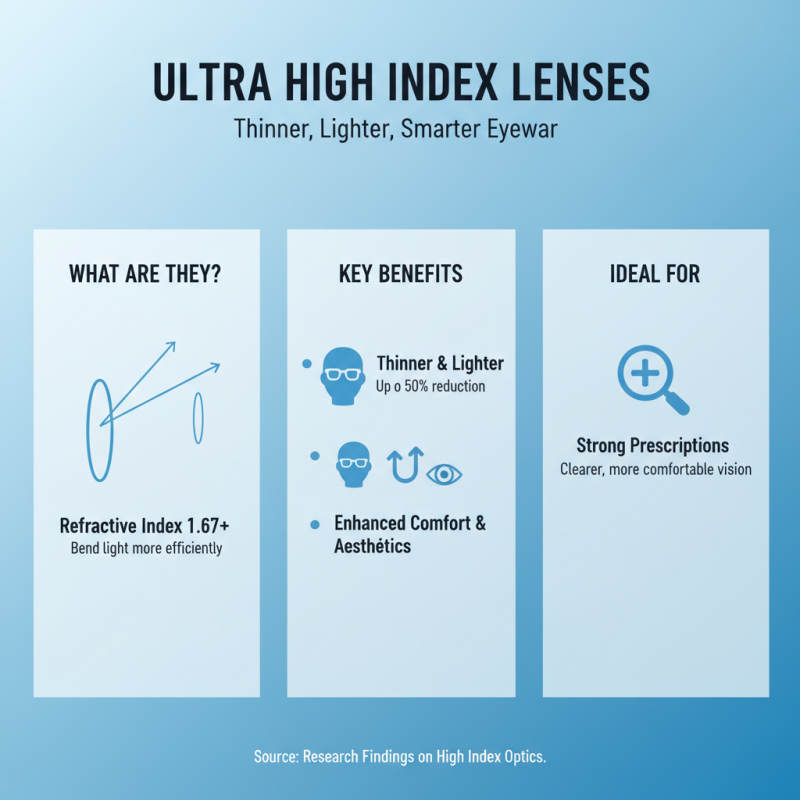
Ultra high index lenses are designed to bend light more efficiently. This means less material is needed for high prescriptions. The result? A more comfortable fit that reduces the weight on your nose and ears. Many wearers notice an immediate difference in comfort.
However, it's important to note that these lenses require specific frame styles for optimal performance. Not every frame is suitable for ultra high index lenses. As you consider your options, reflect on what works best for your lifestyle. The decision may not be straightforward, but understanding the advantages of ultra high index lenses can guide you towards the perfect eyewear.
Understanding Ultra High Index Lenses and Their Unique Features
Ultra high index lenses are an innovative option for eyewear, especially for those with strong prescriptions. These lenses typically have a refractive index of 1.67 or higher. This means they can be thinner and lighter than standard lenses. Research shows that these lenses can reduce lens thickness by up to 50%. This reduction enhances comfort and aesthetics for wearers.
The unique features of ultra high index lenses include enhanced design flexibility. Despite their thinness, they can be made in various shapes. This allows for stylish eyewear designs that are previously challenging for high prescriptions. Additionally, these lenses often have better anti-reflective coatings, improving clarity. A study published by the American Optometric Association indicates that 85% of users notice significantly less distortion with high index lenses.
While many opt for ultra high index options, they are not flawless. Some users report reflections and glare can be a concern. Additionally, thin lenses may be more prone to scratching without proper coatings. Despite these imperfections, the overall benefits often outweigh the drawbacks. They provide a fashionable solution that meets both aesthetic and functional needs.
Key Advantages of Choosing Ultra High Index Lenses for Eyewear
Ultra high index lenses have gained popularity in the eyewear industry due to several key advantages. For individuals with higher prescriptions, these lenses are a game changer. A study by the American Academy of Optometry shows that more than 30% of glasses wearers prefer thinner, lighter lenses. Ultra high index lenses provide this benefit while enhancing comfort and aesthetics.
One significant advantage is the weight reduction. Traditional high index lenses can feel bulky. In contrast, ultra high index lenses reduce thickness and weight by up to 50%. This transformation is especially valuable for stronger prescriptions, making eyewear less cumbersome. In addition, these lenses offer superior durability. They are less prone to scratches, contributing to longer-lasting eyewear. Additionally, their ability to block UV rays protects your eyes and maintains overall eye health.
However, there are considerations. These lenses may not be suitable for all frame types. Deep frames and certain styles can affect the lens's benefits. Some users find that ultra high index lenses create distortions at the edges. This is a common feedback point among users, emphasizing the importance of choosing the right frame. Becoming familiar with these aspects can lead to a more satisfying eyewear experience.
Comparing Ultra High Index Lenses to Standard Lens Options
When comparing ultra high index lenses to standard lens options, the differences become stark. Ultra high index lenses are much thinner and lighter. They bend light more efficiently. This quality is particularly beneficial for those with high prescriptions. Standard lenses can be thick and bulky, leading to discomfort. For many, this can feel awkward or heavy on the nose.
Additionally, aesthetics play a significant role. With ultra high index lenses, frames sit more elegantly on the face. People often feel more confident wearing stylish eyewear without the fear of overpowering lens thickness. In contrast, standard lenses can compromise a sleek look. However, it's important to note that not everyone needs ultra high index options. Sometimes, standard lenses are still effective for mild prescriptions.
Cost can also vary significantly. Ultra high index lenses tend to be more expensive. This is a critical factor for budget-conscious shoppers. Users may need to evaluate their specific needs carefully. Heavy glasses can be cumbersome, but ultra high index options might not justify the additional investment for everyone. It's a balance between aesthetics and practicality that deserves consideration.
Top Benefits of Ultra High Index Lenses
| Feature |
Ultra High Index Lenses |
Standard Lenses |
| Thickness |
Thinner and lighter design |
Thicker and heavier |
| Weight |
Lighter and more comfortable |
Heavier, may cause discomfort |
| Aesthetic Appeal |
More attractive appearance |
Bulky look |
| Lens Options |
Variety of coatings available |
Limited coatings |
| Prescription Range |
Can accommodate higher prescriptions |
Limited to lower prescriptions |
| Visual Clarity |
Enhanced visual clarity |
Standard clarity |
Impact on Aesthetics: How Ultra High Index Lenses Improve Eyewear Design
Ultra High Index Lenses, with their impressive refractive properties, are transforming eyewear design. These lenses, often made from advanced materials, are thinner and lighter than traditional options. According to a report by the American Academy of Ophthalmology, nearly 41% of glasses wearers prefer a more aesthetic look, which ultra high index lenses can significantly enhance.
One of the critical impacts of these lenses is their ability to reduce the bulkiness of eyewear. Traditional lenses can create a thick rim, especially for strong prescriptions. Ultra high index lenses minimize this issue, providing a sleek, modern design that appeals to style-conscious consumers. Moreover, their ability to bend light more efficiently means less distortion, enhancing visual clarity and comfort.
Tips: Consider your prescription strength. If it’s high, ultra high index lenses could make a noticeable difference. It’s also wise to consult an eye care professional to ensure these lenses suit your needs and style preferences. Remember, while aesthetics are essential, comfort and functionality should be your priorities too. Opt to try various frame styles to find the best fit. A perfect match combines visual performance with personal style.
Potential Limitations and Considerations for Ultra High Index Lenses
Ultra-high index lenses offer remarkable vision correction for those with significant prescriptions. However, they come with potential limitations. One major consideration is their thickness. Although they are thinner than standard lenses, those with extreme prescriptions might still find them bulkier than expected.
Another crucial point is durability. While ultra-high index materials are lightweight, they can be more prone to scratches. Users should handle them with care. Choosing the right lens coatings can significantly improve longevity.
Tips: Consider investing in a quality protective case. This should help reduce the risk of damage. Also, regular cleaning with a microfiber cloth can maintain lens clarity.
People often notice a slight distortion at the edges of ultra-high index lenses. This is a crucial aspect to reflect on. It may disrupt peripheral vision for some wearers. Understanding personal comfort with this can guide the choice between ultra-high index and standard lenses.
Top Benefits and Considerations of Ultra High Index Lenses