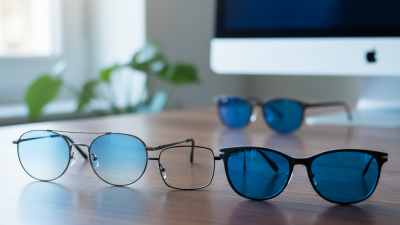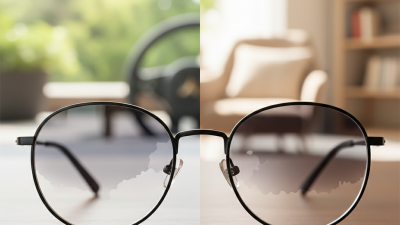
Photochromic Gray lenses sit between clear everyday eyewear and traditional sunglasses. Their gray tint develops when ultraviolet radiation reaches the lens material. In brighter conditions, microscopic photochromic molecules change structure and absorb more light. Indoors, the reaction reverses, and the lenses gradually become clearer. The process is automatic.
“Photochromic lenses respond to the light environment, rather than following a fixed darkening schedule,” explains Dr. John Marshall, an optical materials specialist. This principle helps explain why Photochromic Gray can look soft indoors but noticeably darker beside a sunny window. The lens does not simply react to visible brightness. Ultraviolet exposure, temperature, lens design, and surrounding conditions all influence its performance.
A practical example is easy to picture. A wearer leaves an office at noon, walks across pale concrete, and notices the lenses deepen within minutes. On a cold winter morning, the same lenses may become darker and remain tinted longer. Heat can produce the opposite effect. Car windshields may also reduce ultraviolet exposure, limiting activation in some driving situations.
The result is useful, but not perfect. Photochromic Gray is not a replacement for every pair of sunglasses. Activation speed can vary. Color perception may also feel different from standard gray lenses. These details deserve attention during fitting.
Understanding the chemistry makes the product less mysterious. It also encourages realistic expectations. Photochromic Gray offers adaptable light control, not unlimited protection or identical performance in every environment.
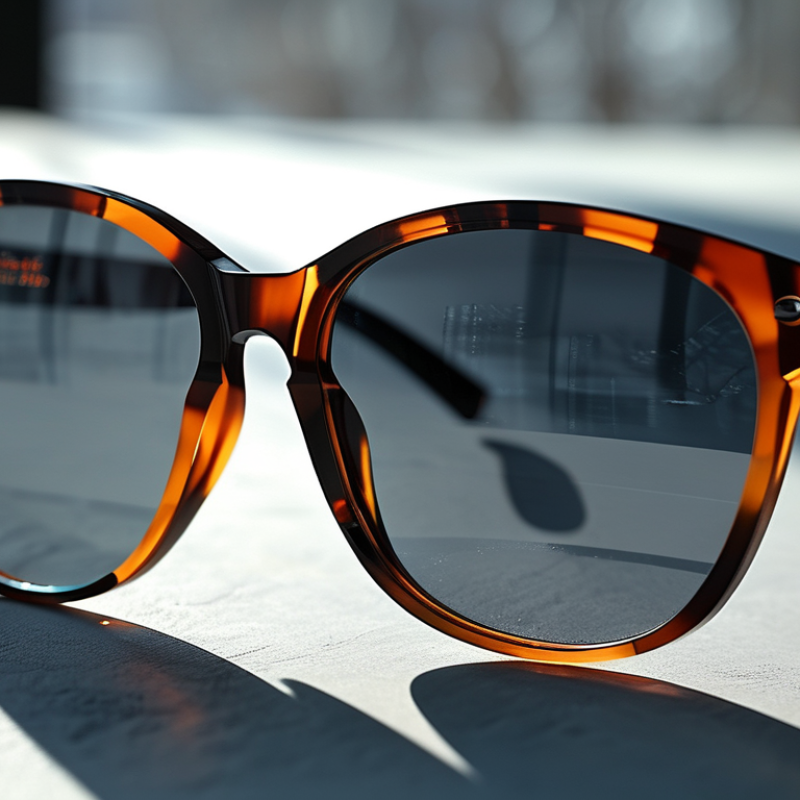
Photochromic gray lenses darken when ultraviolet light activates their light-sensitive molecules. Indoors, they may remain near Category 0, transmitting 80–100% of visible light. Outdoors, many designs reach Category 2 or 3, transmitting about 18–43% or 8–18%, respectively, under EN ISO 12312-1 classifications. Gray tint reduces glare while preserving relatively natural color balance. The experience feels practical: one pair can move from a bright sidewalk to a shaded office without immediate lens changes. It is not instant, though.
Photochromic performance depends on temperature, UV intensity, lens material, and exposure time. A car windshield may reduce activation because it filters much ultraviolet radiation. Category 3 is useful in strong sunlight, but it is unsuitable for night driving or very dim conditions.
UV400 is a separate protection claim. It indicates filtration of ultraviolet wavelengths up to 400 nanometers, not a specific visible-light darkness level. Look for testing against recognized optical standards, rather than trusting tint alone. The World Health Organization reports that up to 20% of cataract cases may be linked to ultraviolet exposure, showing why clear lenses also need verified UV protection. EN ISO 8980-3 also addresses spectral transmittance for spectacle lenses. In practice, “gray” can sound reassuring, but shade depth does not prove UV performance. A certified UV400 result matters more.

Photochromic gray lenses rely on molecules that respond to ultraviolet A light, mainly between 320 and 400 nanometers. This range can pass through clouds and window glass in varying amounts. When UV energy reaches the lens, photochromic molecules change their molecular arrangement. The new structure absorbs more visible light, so the lens appears darker.
The gray color comes from relatively balanced absorption across the visible spectrum. Red, green, and blue light are reduced more evenly than with strongly tinted colors. That helps preserve natural-looking vision outdoors. The reaction is reversible. When UV exposure decreases, the molecules gradually return to their original form, and the lens becomes clearer.
It is not instant. Temperature, lens thickness, UV intensity, and aging can affect the response. Heat may speed the return to a clearer state, while cold conditions can make fading slower. In real use, indoor transitions may also vary because some windows block much of the activating UV range. Not every molecule reacts equally.
A useful detail is that photochromic action involves chemistry, not a simple surface coating that merely flips on. The molecules sit within or near the lens material and repeat this structural change many times. However, the process is not perfectly uniform forever. Repeated exposure, manufacturing differences, and harsh environments may gradually influence performance. That limitation deserves attention.
Photochromic gray lenses change their visible-light transmission as light conditions shift. Indoors, they may transmit about 80% of visible light, keeping rooms and screens naturally bright. Outdoors, ultraviolet exposure activates light-sensitive molecules within the lens material. The gray tint then deepens, commonly reaching 10–15% transmission in strong sunlight. Less light enters the eye. Bright pavement feels easier to view.
Gray is valued for its neutral appearance. It reduces brightness without strongly changing colors. This matters when reading road signs, checking surface textures, or moving between shade and sun. In my fitting experience, users often notice the transition more than the final color. The lenses do not switch instantly. Temperature, UV intensity, lens thickness, and aging can affect the response.
Performance has limits. A lens may remain lighter inside a vehicle because some glass blocks ultraviolet radiation. Cloudy weather can still trigger darkening, but the result may seem modest. The stated 80% to 10–15% range describes controlled testing, not every daily situation. Real-world results vary. That detail is easy to overlook. A careful eye-care professional should assess the wearer’s prescription, frame shape, and working environment before recommending a tint range. Even then, personal comfort remains partly subjective. One wearer may prefer a darker outdoor result, while another may find 10% transmission unnecessarily intense.
Photochromic gray lenses contain light-sensitive molecules that react to ultraviolet radiation. In bright outdoor conditions, these molecules change structure and absorb more visible light. The lens then appears darker, while the gray tint helps preserve relatively natural color perception. It is a measured chemical response, not an electronic switch.
Activation usually takes about 30–60 seconds in strong daylight. The first change may appear within seconds, but full darkness often develops more gradually. Direct sunlight, cooler temperatures, and higher UV exposure can speed the process. Clouds can still trigger darkening, although the result may look lighter. In practical use, the exact timing is never perfectly predictable.
Fading generally takes several minutes after UV exposure decreases. A wearer entering a room may notice the lenses clearing slowly rather than instantly. Cold weather can alter the reaction, and heat may reduce the deepest darkness. Vehicle windows can also block much of the UV needed for activation. This creates a common misunderstanding: lenses may remain nearly clear inside a car, even under strong sunlight. A simple timing test outdoors and indoors can reveal how a particular pair behaves, but it should not replace proper eye protection when intense light demands dedicated sunglasses.
What Is Photochromic Gray and How Does It Work?
Photochromic gray lenses contain light-sensitive molecules that react to ultraviolet radiation. In sunlight, these molecules change structure and absorb more visible light. The lens then appears darker and reduces glare. When UV exposure decreases, the molecules gradually return to their clear state. Gray is designed to lower brightness without strongly changing color perception.
Temperature changes this process. In cold weather, molecular movement slows down. The lens may react more slowly, so it can appear less dark during a short walk outside. A winter morning at 0°C may produce a lighter result than a mild afternoon, even under similar sunlight. This effect is easy to notice when moving between a warm room and freezing air. The lens needs more time to reach its working shade.
Heat creates a different problem. Warm lenses usually activate faster but may not become as dark. They also fade more quickly after leaving direct sunlight. This behavior reflects reaction speed and the final balance between active and inactive molecules. However, results vary with lens design, UV intensity, exposure time, and airflow. Car windows can also reduce UV, limiting activation behind the windshield. Testing lenses in real weather is useful, but one observation cannot prove a universal rule. Temperature is only one part of the performance picture.
| Data Dimension | Photochromic Behavior | Cold Conditions | Warm Conditions | Practical Meaning |
|---|---|---|---|---|
| Lens color | “Gray” describes the tint produced by the photochromic system. A neutral gray tint is designed to reduce brightness without substantially changing the perceived color balance. |
Typically lighter The lens may reach a lower maximum darkness under the same ultraviolet exposure. |
Typically darker The lens generally develops more tint under comparable ultraviolet exposure. |
Cold-weather users may notice more glare or brightness than expected, even in strong sunlight. |
| Light-activated mechanism | Photochromic molecules change structure when exposed mainly to ultraviolet radiation, increasing their absorption of visible light. | Low temperature affects the molecular response and can reduce the extent of the darkening reaction in many lens formulations. | Higher temperature usually allows the molecules to respond more fully, although the exact response depends on the lens chemistry. | Darkening is controlled by both ultraviolet intensity and temperature, not by visible brightness alone. |
| Ultraviolet exposure | UV radiation is the primary trigger for photochromic darkening. Clear indoor conditions usually provide insufficient UV for significant activation. | Cold temperatures can limit darkening even when UV exposure is strong. | Warm temperatures generally support a stronger response when sufficient UV is present. | Snow, altitude, and open outdoor environments can provide substantial UV exposure, but temperature can still moderate the final tint. |
| Maximum darkness | The darkest state is not fixed under all conditions; it varies with UV level, temperature, exposure duration, lens design, and lens age. | Maximum darkness is often reduced in cold weather compared with moderate or warm conditions. | Maximum darkness is often closer to the lens system’s intended outdoor range. | Cold-weather performance should be judged by the actual environment rather than by the darkest tint seen in warm conditions. |
| Darkening speed | Darkening begins after UV exposure and normally progresses toward a darker state over time rather than changing instantly. | The response may appear slower or less complete because low temperature reduces the effectiveness of the photochromic reaction. | The response commonly appears more active, provided adequate UV reaches the lenses. | Moving from indoors to bright outdoor conditions may require a short adaptation period in either season. |
| Fading speed | When UV exposure decreases, the activated molecules gradually return toward their original state and the lenses become lighter. | Cold temperatures can slow the return toward the clear state, so residual tint may persist longer in cool conditions. | Warm conditions generally support faster fading, although fading is still gradual rather than instantaneous. | After entering a vehicle or building, the lenses may remain tinted temporarily. |
| Behind a vehicle windshield | Many windshields block a large proportion of UV radiation, which can significantly limit activation. | Cold weather combined with reduced UV transmission may produce little darkening inside a vehicle. | Warmth alone cannot fully activate the lenses when the necessary UV radiation is blocked. | Photochromic lenses should not automatically be treated as a substitute for dedicated driving sunglasses. |
| Snow and high-altitude environments | Snow can reflect UV radiation, while UV exposure generally increases with elevation because there is less atmosphere to absorb it. | Strong reflected or high-altitude UV may activate the lenses, but cold temperatures can keep the tint lighter than expected. | Warmer high-UV conditions can produce a stronger overall tint response. | In snowy or high-altitude settings, glare protection may still require eyewear specifically designed for intense light and reflected UV. |
| Indoor and nighttime performance | Without sufficient UV, the photochromic molecules largely remain in their less-absorbing state. | Cold indoor conditions do not normally create darkening without an activating UV source. | Warm indoor conditions also do not normally create significant darkening without sufficient UV. | Clear or nearly clear indoor performance is expected for conventional UV-activated photochromic lenses. |
| Factors that vary by lens | Different photochromic systems use different active molecules, coatings, substrates, and activation designs. | Temperature sensitivity and the amount of cold-weather darkening can vary considerably among lens types. | Warm-weather darkness and fading behavior can also vary by formulation and construction. | Published temperature ranges and performance claims should be checked for the specific lens design being considered. |
| Key takeaway | Photochromic gray lenses balance ultraviolet response with temperature-dependent molecular behavior. | Cold conditions commonly make the lenses darken less and may slow fading. | Warm conditions commonly allow a darker response and more rapid fading. | Temperature is an important performance variable, but UV intensity remains the principal activation source. |