Top 5 Blue Photochromic Lenses You Need for Better Vision?
In today's digital age, protecting our vision has become increasingly important. Many people spend hours in front of screens, exposing their eyes to harmful blue light. Blue Photochromic Lenses can significantly help in reducing this exposure. These lenses adapt to changing light conditions, darkening in bright sunlight while remaining clear indoors. This innovative technology promotes eye comfort and overall health.
Choosing the right pair of Blue Photochromic Lenses is crucial. With so many options available, it can be overwhelming. Each product varies in quality and effectiveness. Therefore, understanding the features is necessary for making an informed decision. Some lenses offer better UV protection while others excel in glare reduction. It's essential to evaluate each pair based on your lifestyle needs and preferences.
The right lenses can enhance your vision significantly. However, not every option available is ideal for everyone. The best choice often depends on personal experiences and individual eye conditions. This article will explore the top five Blue Photochromic Lenses you need for better vision, helping you navigate your options effectively.
Understanding Photochromic Lenses and Their Benefits
Photochromic lenses are a revolutionary innovation in eyewear technology. They adjust their tint in response to UV light, offering protection in sunny environments. This feature helps reduce glare and enhances comfort for wearers. Spending time outdoors can strain your eyes, especially under harsh sunlight. Photochromic lenses alleviate this issue effectively.
The benefits extend beyond mere convenience. These lenses can filter harmful blue light, which is linked to digital eye fatigue. As we spend more time on screens, eye strain becomes a growing concern. Blue light protection is essential, particularly for those working long hours on computers. These lenses provide a practical solution that many users may not realize they need.
Despite their advantages, not all photochromic lenses perform equally. Some may not darken sufficiently in bright sunlight. Others might take longer to adjust back indoors. This variability requires careful consideration when choosing a pair. Researching and testing different options is crucial to find the right fit for individual needs. The technology is evolving, and staying informed helps you make better choices for your vision.
Top 5 Blue Photochromic Lenses You Need for Better Vision
| Lens Model |
Light Transmission (%) |
UV Protection |
Transition Speed (sec) |
Scratch Resistance |
| Model A |
85 |
100% UVA/UVB |
30 |
Yes |
| Model B |
90 |
100% UVA/UVB |
25 |
Yes |
| Model C |
78 |
100% UVA/UVB |
35 |
Yes |
| Model D |
82 |
100% UVA/UVB |
28 |
Yes |
| Model E |
88 |
100% UVA/UVB |
32 |
Yes |
What Makes Blue Photochromic Lenses Unique?
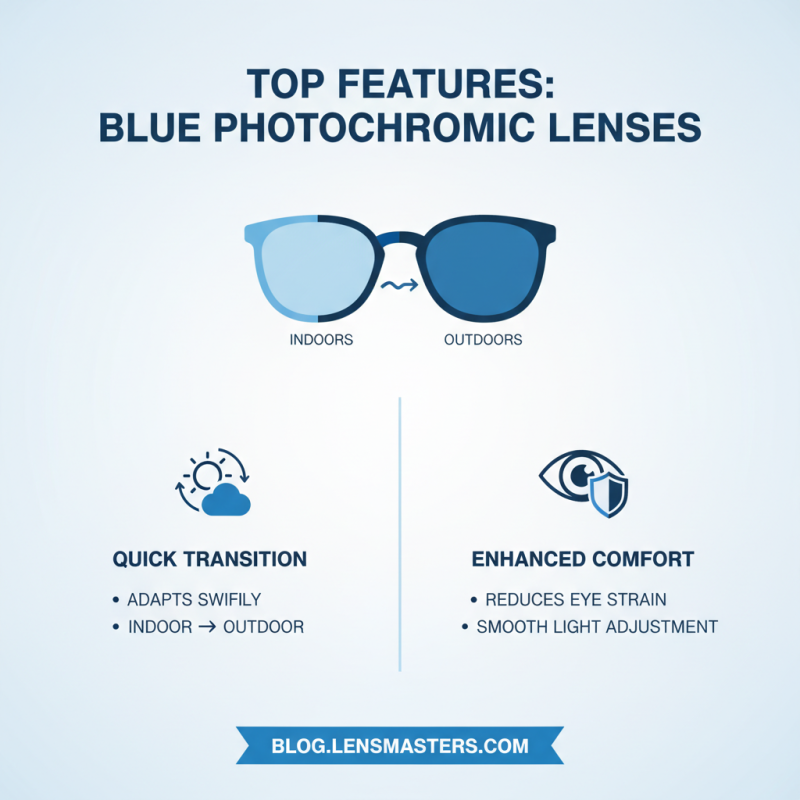
Blue photochromic lenses stand out for their ability to adapt to changing light conditions. These lenses darken outdoors in sunlight and lighten indoors. This feature enhances visual comfort and protects eyes from harmful UV rays. The unique blue filter adds to their appeal, reducing digital eye strain from screens.
Tips: For those who spend hours on computers, blue photochromic lenses can alleviate fatigue. Pair them with good lighting for optimal use. Ensure proper fit to maximize their effectiveness.
Another interesting aspect is the color enhancement these lenses provide. They improve contrast and clarity, making colors appear more vibrant. This can be especially beneficial for outdoor activities, where detail enhances the experience.
Consider your environment. Blue photochromic lenses may not suit all lighting conditions. Testing them in various settings can help determine their effectiveness for your needs. Reflecting on personal experiences can lead to better choices in eyewear.
Top Features to Look for in Blue Photochromic Lenses
When exploring blue photochromic lenses, several key features greatly enhance their effectiveness. One vital attribute is the level of tint adjustment. The best lenses transition quickly between indoors and outdoors. Users often find this crucial for comfort. Abrupt lighting changes can be jarring, and a slow transition may lead to eye strain.
Another significant feature is UV protection. Quality blue photochromic lenses should block harmful UV rays. Prolonged exposure can lead to eye damage. People often underestimate UV risks, especially on cloudy days. Choose lenses with comprehensive UV coverage to safeguard eye health.
Additionally, consider the material of the lenses. High-quality materials can withstand scratches and impacts. Opt for lenses that offer durability without sacrificing clarity. Inferring benefit from flimsy options may lead to poor vision over time. These details matter in real-world use. Users sometimes overlook material importance in their selection process.
Lastly, anti-reflective coatings can substantially improve visual comfort. Glare from screens can be bothersome. A good coating minimizes distractions. It’s essential to test how the lenses perform in various environments. The perfect pair of lenses balances these features for an optimal experience.
Review of the Top 5 Blue Photochromic Lenses on the Market
Choosing the right blue photochromic lenses can greatly enhance your vision, especially for those spending long hours in front of screens. Today's market offers a variety of options. However, it's essential to focus on quality and functionality rather than just brand names.
When selecting lenses, look for those that adapt quickly to changing light conditions. This feature is crucial for users who commute between indoor and outdoor environments. The color change should be reliable and seamless. Comfort is also key; ensure that the lenses are lightweight yet durable.
Tips to consider include checking for UV protection. Effective UV defense is vital in combating eye strain. Additionally, comfort can sometimes be overlooked. Frames should complement your face shape for the best fit, enhancing both aesthetics and practicality.
Reflect on the quality of lens materials, as it affects clarity and protection. Poor materials may lead to distortion or discomfort. Opt for lenses that provide a balance between cost and performance, keeping your visual health in mind. Regularly evaluate how your lenses affect daily tasks and make adjustments when necessary. Your vision deserves thoughtful consideration.
Tips for Choosing the Right Pair of Blue Photochromic Lenses
When choosing blue photochromic lenses, consider your daily activities. If you spend time outdoors, look for lenses that adapt quickly to sunlight. The transition speed is crucial for comfort. Those who work indoors for long hours may prioritize blue light filtering capabilities. This feature helps reduce eye strain from screens.
Next, think about the lens material. Polycarbonate lenses are lightweight and impact-resistant, ideal for active lifestyles. However, high-index lenses provide better optics in thinner designs, perfect for stronger prescriptions.
Always check for UV protection. Quality blue photochromic lenses should block harmful rays effectively. Some users may find that not all lenses transition well in extreme temperatures. It's wise to test pairs in various conditions. Consider how you feel when wearing them for extended periods. Comfort is key. An uncomfortable pair can lead to headaches and fatigue. Choose wisely to enhance your vision experience.
Top 5 Blue Photochromic Lenses Performance Comparison
This chart compares the performance of the top five blue photochromic lenses based on their UV protection level and photochromic activation speed. The data helps in making an informed decision when choosing the right pair of lenses for better vision.