2026 How to Choose the Best Spherical Lenses for Your Needs?
Choosing the right spherical lenses is crucial for various applications, from eyewear to specialized optical devices. According to the Global Market Insights report, the spherical lenses market is projected to grow substantially, reaching USD 15 billion by 2026. This growth reflects the increasing demand for precision optics in diverse fields, including photography, sports, and vision correction.
When selecting spherical lenses, understanding their specifications and performance characteristics is essential. Factors such as focal length, lens material, and coating options significantly affect their effectiveness. A 2022 study from the Optical Society of America highlighted that improper lens selection can lead to subpar performance and user discomfort.
Many consumers might overlook these details, focusing instead on price or brand. It's vital to balance cost with quality and performance. Users should consider their specific needs and consult expert recommendations to ensure optimal results. The right spherical lenses can enhance visual clarity and overall experience, making informed choices transformative.

Understanding Spherical Lenses: Types and Uses
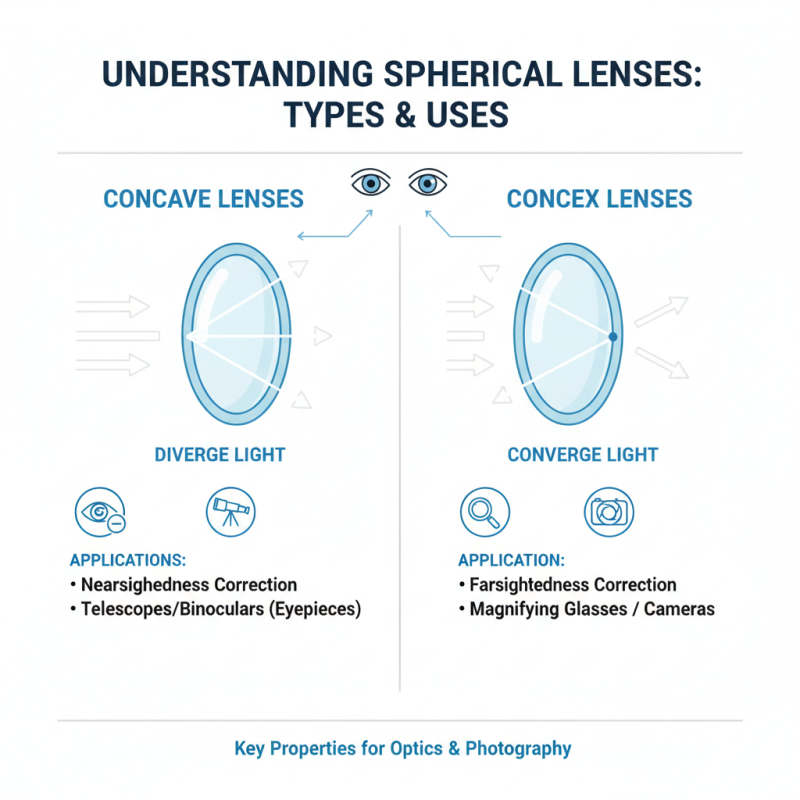
When selecting spherical lenses, it's important to understand the different types available and their specific applications. Spherical lenses can be concave or convex. Concave lenses diverge light, while convex lenses converge it. These properties define how each lens can be used, especially in optics and photography.
For example, concave lenses are often used in eyeglasses for nearsightedness. They help individuals see distant objects more clearly. Convex lenses, on the other hand, are common in magnifying glasses. They help users focus on fine details. Both types serve unique purposes, but it’s vital to consider your specific needs before choosing.
Choosing a lens isn't always straightforward. Factors like material, curvature, and thickness significantly impact performance. Imperfections in lenses can lead to distortions. Testing different lenses may reveal unexpected results. Reflect on your specific requirements. This process requires patience and careful evaluation. Understanding these details leads to better choices for your applications.
Key Factors in Selecting the Right Spherical Lens
Choosing the right spherical lens is crucial for various optical applications. The first key factor is the lens material. Different materials provide varying levels of light transmission and durability. For instance, glass lenses offer high clarity but can be heavier than plastic alternatives. Each material has advantages and disadvantages, impacting overall performance.
Another important consideration is the lens curvature. Spherical lenses can be made with different radii. A flatter lens may create less distortion. Meanwhile, a more curved lens can enhance magnification. Experimenting with different curvatures will help identify what works best for your specific needs.
Also, think about the lens coatings. Anti-reflective coatings can enhance light transmission. However, they may require careful handling to avoid scratches. It’s crucial to balance these features based on your intended use. There may be trade-offs between clarity, weight, and durability. Reflecting on your needs and testing various options will lead to a more informed choice.
Factors to Consider When Choosing Spherical Lenses
This chart illustrates the key factors to consider when choosing spherical lenses, rated from 1 to 10 based on their importance. Material quality and coating are crucial for performance, while price, although important, tends to be less critical in the context of overall lens quality.
Assessing Your Vision Needs and Preferences
Choosing the right spherical lenses requires careful consideration of your vision needs. Many individuals overlook the importance of personal preferences, focusing solely on lens types. However, the right choice can drastically affect visual comfort. According to a report by the Vision Council, nearly 75% of adults use some form of vision correction. Understanding your specific needs is crucial.
Begin by evaluating your daily activities. Do you spend long hours in front of a computer? If so, anti-reflective coatings can reduce glare. Alternatively, if you're active, consider impact-resistant lenses. A study found that sports-related eye injuries can be minimized with proper lens selection. Factors like UV protection and scratch resistance can enhance durability.
Seek professional advice, but remain discerning. Not every recommendation will suit your lifestyle. Collect feedback from peers to gauge their experiences. Each person’s journey with vision correction is unique, and what works for one may not fit another. As the market evolves, staying informed about the latest innovations is essential for making empowered choices.
Comparative Analysis of Lens Materials and Coatings
When selecting spherical lenses, understanding the materials and coatings is crucial. Different materials, like polycarbonate and glass, have unique properties. Polycarbonate is lightweight and impact-resistant, making it a popular choice for safety eyewear. A report by the Optical Society states that polycarbonate lenses have 99% UV protection. However, their scratch resistance isn’t as high as glass.
Coatings also play a vital role in lens performance. Anti-reflective coatings reduce glare and improve visibility, especially in bright conditions. A survey indicated that lenses with these coatings improve visual comfort by 30%. Additionally, photochromic coatings adjust to light changes, offering convenience for outdoor use. Nonetheless, these coatings can wear off over time, necessitating occasional replacements.
While lens options abound, choosing the right combination requires reflection on personal needs. Each material and coating has its advantages and drawbacks. Assessing these can ensure optimal performance in everyday scenarios and specific activities. Thus, a careful evaluation of both material and coating is essential for making an informed choice.
2026 How to Choose the Best Spherical Lenses for Your Needs?
| Lens Material |
Weight (g) |
Scratch Resistance |
UV Protection |
Coating Options |
| Polycarbonate |
25 |
High |
Yes |
Anti-reflective, Hydrophobic |
| Trivex |
30 |
Very High |
Yes |
Anti-fog, Mirror finish |
| Glass |
40 |
Medium |
Yes |
Anti-reflective, UV Filter |
| Polyamide |
20 |
Medium |
Yes |
Hydrophobic, Anti-scratch |
Practical Tips for Purchasing Spherical Lenses Online or In-store
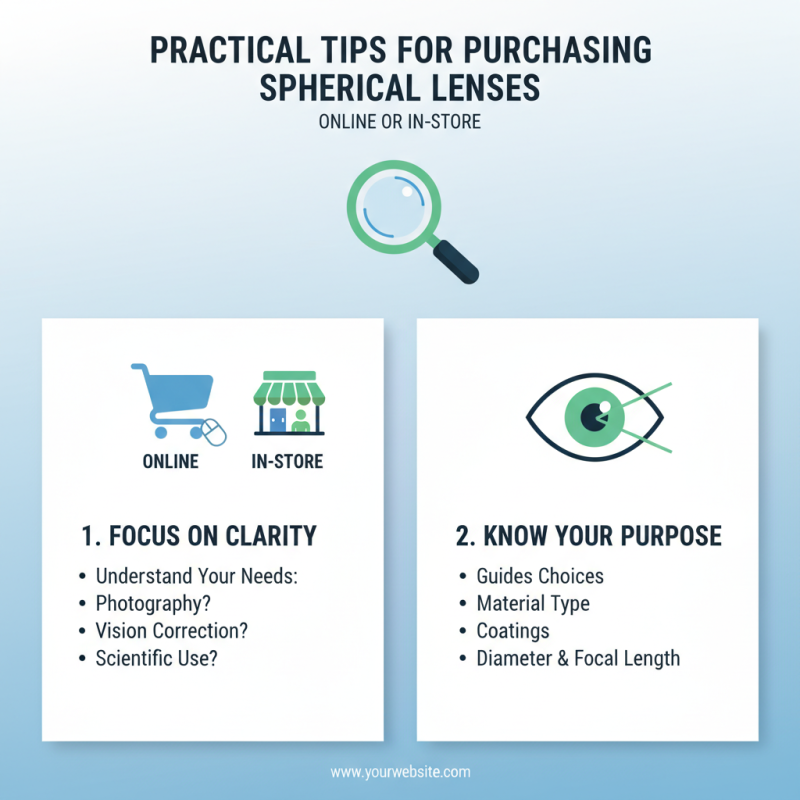
When purchasing spherical lenses, whether online or in a physical store, it's essential to focus on clarity. Start by understanding your specific needs. Consider what you'll use the lenses for. Are they for photography, vision correction, or scientific purposes? Knowing this will guide your choices effectively.
When shopping online, compare images and descriptions carefully. Look for detailed specifications. Trustworthy sites provide technical details about the curvature and refractive index. If buying in-store, examine the lenses closely. Hold them up to light to check for imperfections. Speak with a knowledgeable salesperson. Their expertise can help clarify any uncertainties you may have.
Remember, not all lenses meet the same standards. Reviews can shed light on user experiences. They highlight both pros and potential drawbacks. Look for feedback on durability and performance. This will enhance your confidence in your final decision. Always take your time; hasty choices may lead to disappointment later on.