Top 5 Tips for Choosing Spectacle Lenses for Your Needs?
Choosing the right spectacle lenses is crucial for your vision and comfort. With numerous options available, the selection process can be overwhelming. Understanding your specific needs is essential to make an informed decision. This article aims to provide insights to help you navigate this journey.
Spectacle lenses come in various types, designed for distinct visual requirements. For instance, single vision lenses are perfect for correcting distance vision. In contrast, multifocal lenses cater to those with presbyopia. Each type serves a unique purpose, and knowing your lifestyle can guide your choice effectively.
Choosing the right spectacle lenses requires consideration of several factors. Comfort, durability, and lens coatings play significant roles. Often, people overlook these aspects, leading to dissatisfaction. It's vital to reflect on your daily activities and how your lenses will impact them. With the right information and a bit of self-assessment, you can find the perfect lenses for your needs.

Understanding Your Prescription: Key Measurements for Lenses
When choosing spectacle lenses, understanding your prescription is crucial. Key measurements include sphere, cylinder, and axis. Sphere indicates the lens power needed for nearsightedness or farsightedness. The American Optometric Association states that over 40% of adults need vision correction. Accurate sphere values ensure clearer vision.
Cylinder measures astigmatism. According to a report by the World Health Organization, 1 in 3 people have some degree of astigmatism. Knowing this measurement helps in selecting lenses that compensate for this curvature. Axis, often overlooked, aligns the lens to correct any astigmatism effectively. Misalignment can lead to discomfort and blurred vision.
The pupillary distance (PD) is another essential measurement. It ensures the lenses are centered correctly. Studies show improper PD fitting can reduce visual comfort by up to 25%. A precise fit can enhance the wearing experience dramatically. Remember, even minor discrepancies can impact overall satisfaction. Be open to revisiting your measurements for the best outcome.
Types of Lenses: Choosing Between Single Vision, Bifocal, and Progressive
Choosing the right spectacle lenses can significantly impact your visual comfort and overall satisfaction. When considering types of lenses, you typically choose between single vision, bifocal, and progressive lenses. Each type serves different vision needs and lifestyles.
Single vision lenses are designed for one field of vision. They are suitable for individuals who require either distance or reading prescriptions. According to the American Academy of Ophthalmology, over 140 million people in the U.S. wear single vision glasses. This type of lens offers simplicity and is often the most affordable choice.
Bifocal lenses provide two distinct fields of vision: one for distance and another for near vision. These lenses feature a visible line separating the two sections. They are ideal for individuals with presbyopia. However, some users report discomfort adapting to the line. Progressive lenses, on the other hand, offer a seamless transition between different vision zones, accommodating a range of vision needs without visible lines. This design caters to those requiring multifocal vision correction.
A survey by the Vision Council found that around 60% of users prefer progressive lenses for their aesthetics and functionality.
When selecting lenses, consider your daily activities and visual demands. Consult with an eye care professional to understand which option suits you best. Focus on comfort and clarity, as they greatly influence your satisfaction with any lens type.
Lens Materials: Weighing the Benefits of Plastic, Polycarbonate, and Glass
When it comes to choosing spectacle lenses, the material plays a significant role in comfort and functionality.
Plastic lenses are lightweight and thin. They offer good optical quality and are often the most affordable option.
However, they may scratch easily. Using anti-scratch coatings can help, but wear and tear over time can affect clarity.
Polycarbonate lenses are another great choice, especially for active lifestyles.
They are
impact-resistant, making them ideal for children and sports enthusiasts.
While their optical clarity is slightly less than that of plastic, they provide excellent protection against shattering.
One downside is that they can be more expensive. Still, the safety benefits make them worthy of consideration.
Glass lenses are known for their superior clarity and
scratch resistance.
However, they are
heavier and can break more easily if dropped. This fragility often discourages their use for everyday wear.
Some people still prefer glass for its optical quality, especially in specific situations.
The trade-offs between
comfort and
quality often require thoughtful reflection. Each material has its unique advantages and drawbacks, making
personal preference crucial in the decision-making process.
Coatings and Treatments: Enhancing Your Lenses with Anti-Reflective and UV Protection
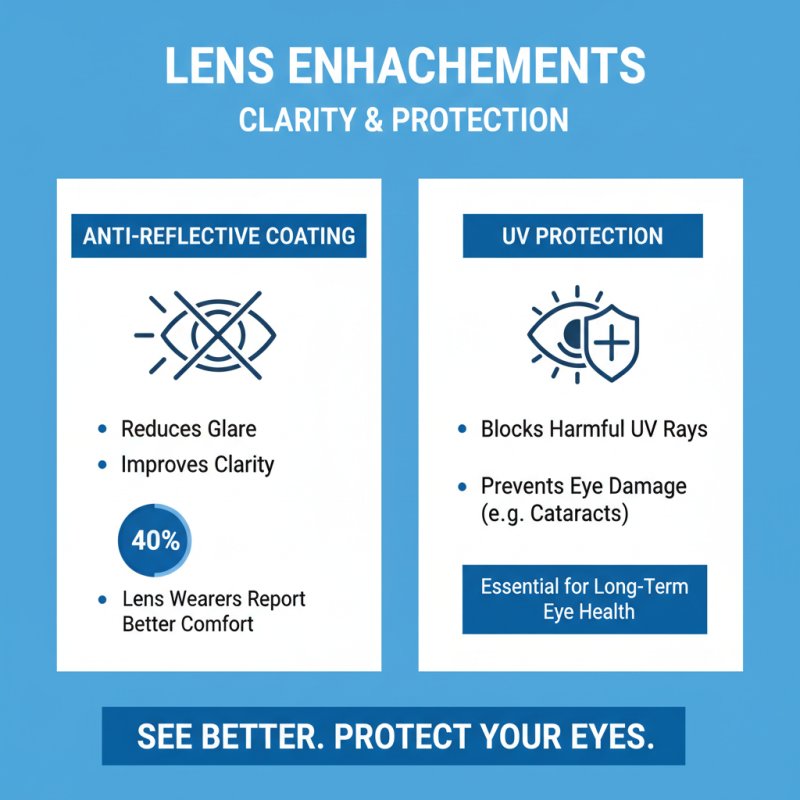
Choosing spectacle lenses involves more than just vision correction. Coatings and treatments play a vital role in enhancing performance and protection. For instance, anti-reflective coatings can significantly improve clarity and reduce glare. A recent industry report indicates that 40% of lens wearers notice a marked improvement in visual comfort when using anti-reflective coatings. Additionally, UV protection is essential. Studies show that long-term exposure to UV rays can lead to cataracts and other eye issues.
When selecting your spectacle lenses, consider these tips. First, evaluate your daily activities. If you’re frequently on screens, an anti-reflective coating will help reduce eye strain. Second, assess your environment. If you're often outdoors, prioritize lenses with strong UV protection. This isn’t merely an option; it's a necessity for long-term eye health.
Reflect on your lifestyle and needs. It’s easy to overlook coatings, but they can affect overall satisfaction with your lenses. Many find that they need to adjust their choices after realizing how much coatings influence their visual experience. Don't hesitate to consult a specialist. Their insights can guide you in making the right, informed decisions for your eyes.
Lifestyle Considerations: Selecting Lenses Tailored to Your Daily Activities
When selecting spectacle lenses, consider your daily activities. Different lifestyles demand tailored solutions. For instance, active individuals who enjoy sports may benefit from polycarbonate lenses. They are lightweight and shatter-resistant, essential for safety. A report from Vision Council states that nearly 40% of spectacle wearers prioritize durability and impact resistance.
Office workers often require lenses that reduce eye strain. Blue light blocking coatings can help. Research indicates that 78% of adults experience digital eye strain. This condition can lead to discomfort during long hours in front of screens. Choosing lenses with anti-reflective treatment can improve comfort and clarity.
For those who frequently switch between indoor and outdoor environments, photochromic lenses are a wise choice. These lenses adapt to changing light conditions, providing convenience and protection. However, some users report slower transitions in certain lighting. It's essential to weigh the pros and cons based on individual needs and activities. Understanding these lifestyle considerations is pivotal in making an informed lens selection.