Top 10 Spectacle Lens Rx Options for Clear Vision and Style?
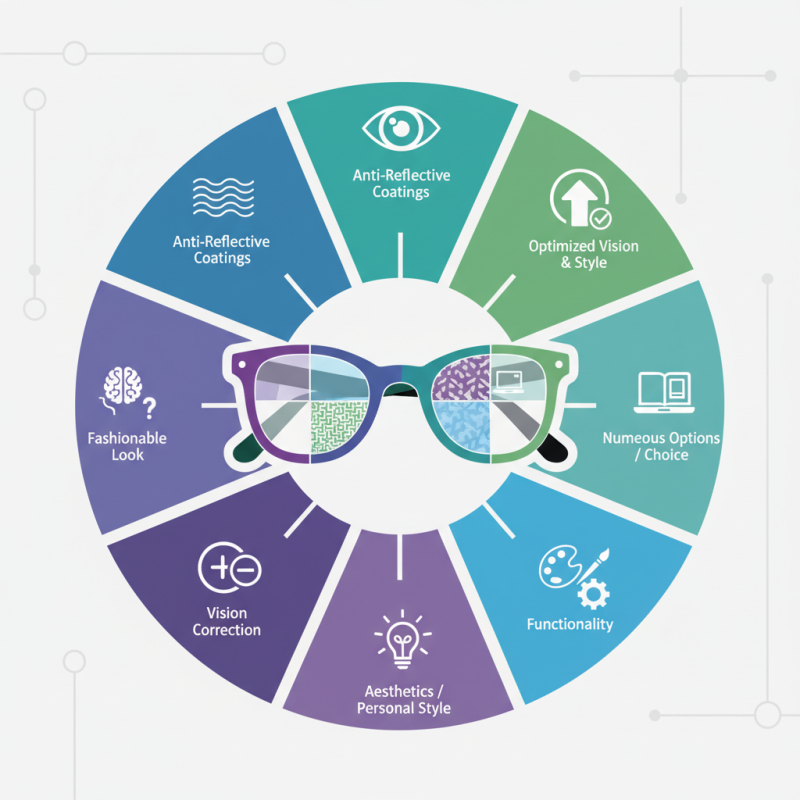
When it comes to vision, choosing the right Spectacle Lens Rx is essential. Many people struggle with finding the perfect balance between clarity and style. This task can feel overwhelming. With numerous options available, making a choice often leads to confusion.
Several lens types cater to different needs. Some focus on aesthetics while others prioritize functionality. For instance, anti-reflective coatings enhance clarity but might not appeal to everyone. It’s vital to consider personal style.
You'll find that selecting the right lenses often involves trial and error. It can be frustrating to realize that the initial choice may not suit your needs. Reflecting on your daily activities can guide your decision. A thoughtful approach will help you find lenses that provide both a clear vision and a fashionable look.
Top 10 Spectacle Lens Rx Options for Optimal Visual Clarity
When choosing spectacle lens prescriptions, clarity is key. Different lens options cater to various visual needs. Single vision lenses provide an easy solution for those needing vision correction at one distance. They are straightforward and effective, perfect for everyday wear.
Bifocal lenses offer two distinct prescriptions in one lens, serving those who struggle with both near and far vision.
Progressive lenses represent another popular choice. They provide a smooth transition for wearers requiring multiple vision corrections. Practical yet stylish, they eliminate the need for multiple pairs of glasses. However, adjusting to progressive lenses may take time. Some users experience a bit of distortion during the transition phase.
High-index lenses are designed for lighter weight and thinner profiles. They are perfect for those with strong prescriptions, providing comfort and style alike. Antireflective coatings can enhance visual clarity by reducing glare, especially in bright conditions. However, these coatings can show scratches easier, requiring extra care. Each option has its strengths and weaknesses, prompting thoughtful consideration.
Understanding Prescription Lenses: Types and Their Unique Benefits
Prescription lenses play a vital role in enhancing vision while offering an opportunity for style. In 2022, over 148 million people in the U.S. wore glasses, according to the Vision Council. Different types of prescription lenses serve distinct needs and preferences, ensuring both clarity and aesthetics.
Single vision lenses are the most common type. They cater to either nearsightedness or farsightedness. However, individuals with multiple vision needs often overlook bifocals or progressive lenses. Bifocals offer two prescriptions but may limit peripheral vision. Progressives provide a seamless transition but can take time to adjust. A 2021 report indicated that nearly 75% of wearers found these lenses beneficial yet challenging initially.
For those with an active lifestyle, polycarbonate lenses offer durability and impact resistance. They are especially favored by athletes. On the other hand, high-index lenses are lighter, making them appealing for strong prescriptions. Some users report a distortion in peripheral vision with high-index options. Choosing the right lens involves understanding these trade-offs and reflecting on personal needs. Each individual faces unique challenges when selecting, leading to different experiences with vision correction.
Comparing Single Vision and Multifocal Lenses: Which One to Choose?
When choosing between single vision and multifocal lenses, consider your lifestyle. Single vision lenses are designed for one prescription. They offer clarity for close-up tasks or distance vision. These lenses are often lighter and less expensive. However, they do not accommodate multiple vision needs.
On the other hand, multifocal lenses provide a solution for individuals with presbyopia. Research shows that nearly 90 million Americans over 40 require some form of multifocal lenses. These lenses offer multiple prescriptions, allowing wearers to see clearly at different distances. They can be more complex in design. Some users report an adjustment period, which can be frustrating. Others find the transition smooth.
Think about your daily activities. If you frequently switch between tasks, multifocal could be ideal. However, some may struggle with peripheral vision in these lenses. Finding the right fit is essential. Consider trials or consultations with professionals to ensure the best choice for your visual needs.
The Impact of Lens Materials on Clarity and Comfort in Eyewear
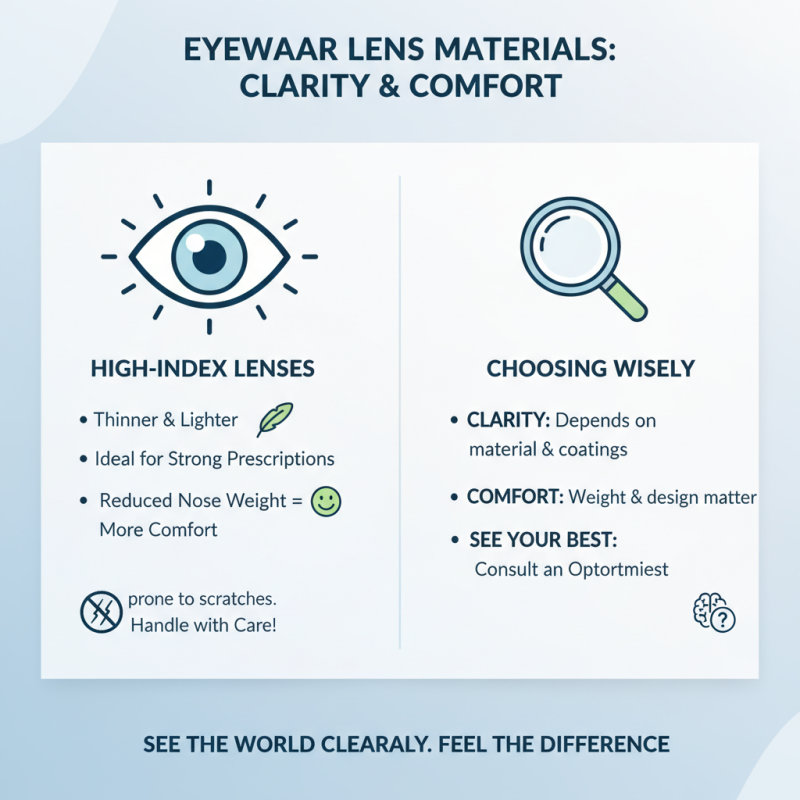
Lens materials play a significant role in both clarity and comfort for eyewear users. Choosing the right material can make a difference in how you see the world. High-index lenses are thinner and lighter, ideal for those with strong prescriptions. They reduce the weight on your nose, enhancing comfort. However, they may scratch more easily. Proper care is necessary to maintain their clarity.
Polycarbonate lenses offer impact resistance and are lightweight, perfect for active lifestyles. They provide decent clarity but might not be as scratch-resistant as other options. Scratch-resistant coatings can help, yet they don’t last forever. Users should regularly check for signs of wear; fogging can also be an issue in certain conditions.
Ultimately, the choice of lens material should reflect individual needs. Some prefer the ultra-light feel of high-index lenses, while others might opt for the durability of polycarbonate. Each choice comes with trade-offs. Balancing clarity with comfort is necessary. If your lenses aren't working as expected, you may want to reconsider your options. Adjusting your choice could lead to better vision and improved daily experiences.
UV Protection and Blue Light Filtering: Essential Features for Eye Health
When choosing spectacle lenses, UV protection and blue light filtering are vital for maintaining eye health. According to the American Optometric Association, excessive UV exposure can lead to cataracts and other serious conditions. Lenses with UV protection block harmful rays, ensuring your eyes remain safe from damage. Opt for lenses that offer 100% UV protection for the best safeguard.
Blue light exposure from screens is another growing concern. Studies show that blue light can cause digital eye strain and might disrupt your sleep patterns. Look for lenses with blue light filtering technology. These lenses can reduce glare and help your eyes feel more comfortable during long screen time. They may also promote better sleep quality, as they filter out disruptive wavelengths.
**Tips:**
1. Check your lenses for both UV and blue light protection to maximize benefits.
2. Regular breaks from screens can help alleviate eye strain and improve comfort.
3. Consider lens coatings that enhance comfort, but be aware of potential reflections. You might find those irritating at times.
Conclusion
This article explores the top 10 Spectacle Lens Rx options that not only enhance visual clarity but also complement personal style. It begins by detailing the various types of prescription lenses available, highlighting their unique benefits to cater to different vision needs. A comparison between single vision and multifocal lenses is provided, assisting readers in making an informed choice based on their lifestyle and visual requirements.
The discussion further delves into the impact of lens materials on overall comfort and clarity, emphasizing the significance of selecting the right material for one’s eyewear. Additionally, essential features such as UV protection and blue light filtering are covered to underline their importance for eye health. Finally, stylish lens coatings are examined for their role in enhancing both the durability and aesthetic appeal of spectacle lenses, ensuring that wearers achieve both functionality and style in their eyewear choices.