Leave Your Message

China Top 10 Digital Free Form Lenses Manufacturers?

Digital Free Form Lenses have changed how prescriptions can be translated into customized lens surfaces. For buyers comparing manufacturers in China, the challenge is not simply finding advanced machinery. It is understanding how each supplier handles design, surfacing, inspection, and consistent production. A polished sample matters. So does the process behind it.

This guide examines ten manufacturers through practical questions: Can they produce prescription-specific designs? What lens materials and coatings do they offer? How do they check surface accuracy and finished-lens quality? Buyers should also ask about fitting data, order support, lead times, and traceable quality procedures. These details can matter at the dispensing counter, where a poorly matched lens may mean remakes and frustrated customers. A short supplier list cannot prove performance. Ask for current specifications and sample-order results.

Optometrist and vision scientist Dr. James Sheedy is relevant to the broader principles of visual performance and patient-centered optical design. The sentence below is an editorial paraphrase, not a verified quotation from him: “A lens performs only as well as its design, measurements, and fitting allow.” That distinction matters. This overview does not claim a definitive ranking; capabilities and product lines can change. Some information may be incomplete. Readers should verify technical claims directly with manufacturers and compare like-for-like samples before choosing a supplier.

China Top 10 Digital Free Form Lenses Manufacturers?

Digital Free-Form Lenses Explained: 1.50–1.74 Refractive-Index Options

Digital free-form lenses use computer-guided surfacing to shape lens curves for a prescription and, in some designs, frame measurements. The refractive index describes how strongly lens material bends light. It does not measure optical quality by itself.

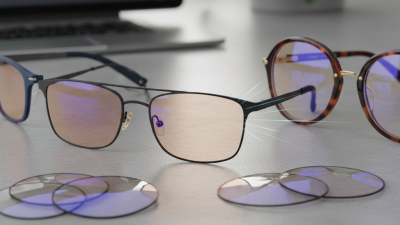
At 1.50, lenses are often a practical choice for lower prescriptions and may offer good clarity. Options around 1.60 or 1.67 can reduce edge thickness for stronger prescriptions. A 1.74 lens may be thinner still, but the result depends on prescription strength, frame size, and lens position. Small frames can help, too. Thinner is not always better.

Higher-index materials may show more color fringes at the edge of vision because they often have lower Abbe values. The effect varies by material and wearer. Digital free-form processing can refine surface geometry, but it cannot remove every optical trade-off. Coatings, accurate measurements, and proper fitting matter. Ask an optician to compare thickness estimates for your actual prescription and frame. The number alone can mislead. A clear, comfortable lens is the goal, even when the thinnest option looks tempting.
How Free-Form Surfacing Turns Prescription Data into Customized Lens Geometry

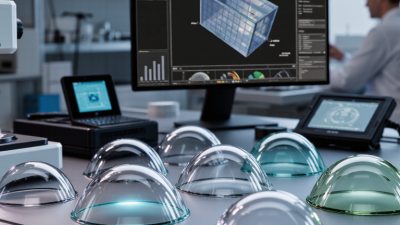
Free-form surfacing turns prescription and fitting measurements into a calculated lens surface. The prescription may include sphere, cylinder, axis, and addition power. When supplied, pupillary distance, fitting height, and frame position can further guide the design. Small numbers matter. A technician enters these values into design software, which calculates how lens power should vary across its surface.

A digital map then guides a precision generator as it shapes the lens blank. This can place optical power more selectively than conventional, standardized surface designs. The finished geometry is intended to suit both the prescription and the wearer’s chosen frame. Still, customization is not automatic perfection. Fit still matters. Incorrect measurements or frame adjustments can limit how well the calculated design performs in everyday use.

Quality checks help catch problems before dispensing. A lensmeter verifies key power values, while inspection can reveal surface or edging defects. Wearers may also need time to adapt, especially when a new design changes peripheral perception. The process is not magic. Digital calculations depend on accurate inputs, and real-world comfort does not always match a model’s prediction. Careful measurement, fitting, and follow-up remain essential parts of turning prescription data into useful lens geometry.

From Prescription Power to Lens Surface Curvature

A simplified optical model shows how prescription power relates to the curvature of a single refracting surface.

Illustrative physics calculation, not measured manufacturing data. Values use a refractive index of 1.50 and the simplified relation F ≈ (n − 1) / r, where F is optical power in diopters and r is surface radius in meters. Real free-form lens designs use the full prescription and fitting parameters to optimize customized lens geometry.

How to Identify China’s Top 10 Manufacturers: Capacity, Exports, and Product Range

Identifying China’s top digital free-form lens manufacturers takes more than comparing online catalogues. Check production capacity through monthly output, surfacing-line numbers, available coatings, and realistic lead times. Ask whether quoted capacity means installed machinery or completed orders. That difference matters. A large figure may not show how much capacity is available for customized work. Request recent sample records and ask how prescriptions are mapped, polished, and inspected. I would not treat a polished factory tour as proof; it may miss everyday bottlenecks. Look closer.

Export experience can indicate operational consistency, but it is not proof of quality by itself. Review shipment frequency, destination markets, and whether product documents match the samples provided. Export records may be incomplete, so use them alongside trial orders and direct technical questions. Compare product range by lens material, refractive index, design, prescription limits, and coating options. A broad range can hide gaps. Ask for technical sheets and samples across several designs, then inspect power accuracy, edge finish, and packaging. Suppliers should explain corridor choices and fitting requirements clearly. Compare actual trial-order lead times with quoted schedules, especially during busy periods. No single measure settles the ranking; weigh repeatable quality, transparent capacity, export reliability, and range against your expected order mix.

Compare Manufacturers by 1.60 and 1.67 Index Lenses, Coatings, and Lead Times

When comparing China’s top 10 digital free-form lens manufacturers, look beyond price lists. Ask each supplier to quote the same prescription range in 1.60 and 1.67 index materials. Higher-index lenses can reduce edge thickness, but the result depends on prescription, frame size, and lens design. Check whether the quote includes the same design type, fitting data requirements, and quality checks. A clear comparison needs matching specifications.

Tips: Request coating details in writing. Compare hard-coat durability, anti-reflective performance, and cleaning guidance. Ask for sample lenses or test reports where available. Small differences matter.

Lead times deserve equal attention. Ask for separate estimates for standard and customized orders, and confirm when the clock starts: order approval, prescription verification, or receipt of fitting measurements. A quoted delivery window may not include shipping or rework. Also check how suppliers handle defects and remakes.

Keep the details in one comparison sheet; otherwise, a fast quote can look better than it is. No single index or coating is best for every wearer, and supplier claims should be checked against actual order conditions. One point is easy to miss: stated production times can change during busy periods.

Quality Benchmarks: ISO 8980 Standards and 0.25-D Prescription Increments

When comparing China’s digital free-form lens manufacturers, check how they document ISO 8980 compliance. The ISO 8980 series addresses optical and physical requirements for finished spectacle lenses, with different parts covering specific lens types and tests. Ask for the applicable standard, test method, and records—not just a certificate image. A clear answer is more useful than a broad claim.

Prescription increments deserve equal attention. A quarter diopter, or 0.25 D, is a common ordering step for sphere and cylinder powers. It is not, by itself, proof of accurate production or an ISO requirement. Ask whether the supplier accepts the requested powers, how it verifies finished lenses, and how it records axis, prism, and other relevant measurements. Small differences matter. A lens marked correctly can still need careful inspection.

For progressive designs, request sample measurement reports and confirm how the manufacturer checks power across the lens zones. Ask about equipment calibration, batch traceability, and handling when a result falls outside its stated tolerance. These details help buyers compare suppliers on repeatability, not polished product sheets alone. I would also ask for a sample pair before placing a large order; specifications can look excellent on paper, and real-world fit sometimes reveals gaps.

China Top 10 Digital Free Form Lenses Manufacturers? - Quality Benchmarks: ISO 8980 Standards and 0.25-D Prescription Increments

Manufacturer-neutral quality benchmarks; this table is not a company ranking. A 0.25 D prescription step is common in ordering, but is not an ISO 8980 requirement.

No. Quality dimension Relevant benchmark or factual reference What buyers should verify
1 Single-vision and multifocal lens requirements ISO 8980-1 covers specifications for uncut finished spectacle lenses, including single-vision and multifocal lenses. Request test documentation for the applicable lens type and the current standard edition.
2 Power-variation lenses ISO 8980-2 specifies requirements for power-variation lenses. Confirm that the standard and test results apply to the specific progressive or other power-variation design being supplied.
3 Light transmission ISO 8980-3 addresses transmittance specifications and test methods for spectacle lenses. Ask for applicable luminous and UV transmittance results where relevant to the lens material, tint, or treatment.
4 Anti-reflective coatings ISO 8980-4 specifies requirements and test methods for anti-reflective coatings on spectacle lenses. Check coating test reports and clarify which coating layers and lens surfaces are covered.
5 Abrasion-resistant surface claims ISO 8980-5 sets minimum requirements for spectacle lens surfaces claimed to be abrasion-resistant. Request the test method, results, and the exact surfaces or products covered by the claim.
6 Prescription power increments 0.25 diopter (D) steps are commonly used for sphere and cylinder prescription values; ISO 8980 does not prescribe this ordering increment. Confirm the available power range and increments for the specific material, design, and product.
7 Cylinder axis notation Cylinder axis is specified in angular degrees, conventionally from 0° to 180° in spectacle prescriptions. Check order-entry limits, axis handling, and the final lens verification record.
8 Addition power An addition (ADD) is a near-vision power difference, expressed in diopters, used in multifocal and progressive prescriptions. Verify that the ordered ADD, fitting measurements, and lens design are consistent; available increments can vary by product.
9 Digital free-form surfacing Free-form production uses digitally controlled surfacing to create lens surface geometry; the term alone does not define a single design or performance level. Compare the design description, prescription range, fitting requirements, and validation data rather than relying on the “free-form” label alone.
10 Traceability and conformity records ISO 8980 is a series of product standards; the applicable part depends on the lens characteristic being assessed. Request batch identification, test records, declared standard editions, and clear identification of the tested product configuration.