Choosing a lens supplier is not just a price comparison. Spectacle Lenses affect daily comfort, visual clarity, and the reliability of an eyewear business. The World Health Organization’s World Report on Vision estimates that at least 2.2 billion people have near or distance vision impairment. In at least 1 billion cases, vision impairment could have been prevented or remains unaddressed. The Lancet Global Health Commission on Global Eye Health also highlights the substantial worldwide burden of vision loss. These reports show why dependable optical products matter, though they do not rank manufacturers.
China’s lens industry serves domestic and international buyers with varied materials, designs, coatings, and production capabilities. This guide introduces ten manufacturers for closer evaluation, not as a definitive ranking. A useful comparison looks beyond catalogue images. Check prescription range, lens designs, coating options, production quality controls, documentation, and sample consistency. Ask how the supplier handles a scratched coating or a delayed order. Small details reveal a lot.
There is no perfect shortlist. Public company information can be uneven, and product claims deserve verification. Buyers should request current specifications, samples, and relevant quality documents before making decisions. That takes time. Still, it is more dependable than choosing from a polished brochure alone. The companies discussed here offer a starting point for research into China’s spectacle lens manufacturing sector. Use the list to ask better questions, then assess each supplier against your own market, order volume, and service requirements.
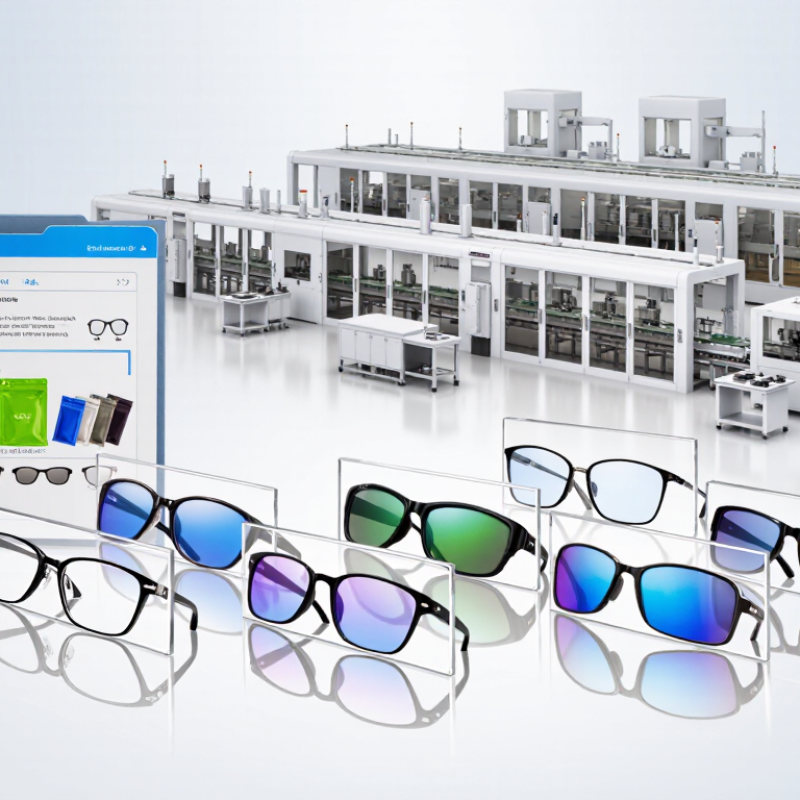
China’s spectacle lens manufacturing industry brings together optical design, material processing, surface coating, inspection, and order fulfillment. A production line may take a lens blank through prescription surfacing and preparation for edging. Common materials include resin and mineral glass, with specifications varying by refractive index, tint, and coating. A lens is not just a clear disc. Small errors matter.
Manufacturers typically check optical power, cylinder, axis, and optical center against the order. Instruments such as lensmeters help verify these measurements, while coating checks assess appearance and durability. Automated equipment supports consistent output, but calibration and trained operators remain important. A polished surface can still hide a problem. Inspection needs care.
The industry serves domestic demand and overseas buyers, with production capacity ranging from customized orders to large runs. Buyers often compare technical documents, sample lenses, delivery control, and after-sales communication rather than relying on price alone. Capacity by itself tells little about consistency. One limitation is that published factory descriptions may not reveal how each process is controlled, so an on-site assessment or third-party testing can add useful evidence. Even then, no single sample guarantees every batch will match.

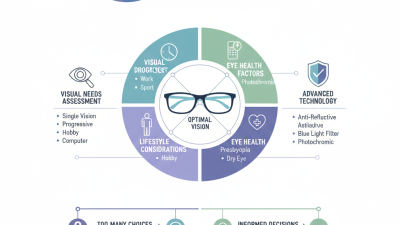
Spectacle lenses are selected by prescription, frame shape, daily use, and material limits. Single-vision lenses provide one correction across the lens. Bifocals have distinct viewing zones, while progressive lenses blend distance, intermediate, and near vision without a visible dividing line. The transition takes adjustment. High-index materials can make stronger prescriptions thinner, though lens design and frame size also affect edge thickness. Photochromic lenses darken outdoors, but their response can vary with temperature and time spent in a vehicle.
Manufacturing begins with a lens blank, often molded from resin or formed from glass. For prescription lenses, digital freeform surfacing uses computer-guided tools to cut precise curves onto the rear surface. The lens is then polished, cleaned, and checked against the prescription. A technician may inspect it under focused light for scratches or surface defects. Accuracy depends on calibration, not just sophisticated equipment.
Coatings add practical functions. A hard coat helps resist everyday abrasion, while vacuum-deposited layers can reduce reflections. These treatments require careful cleaning and controlled application; dust can create visible flaws. Quality checks may include measuring optical power, alignment, thickness, and coating uniformity. Small errors matter. Still, a technically precise lens may not feel comfortable if its fitting height or frame position is wrong. Manufacturing quality and proper dispensing both shape the wearer’s experience.
| No. | Lens Type | Optical Design or Function | Core Manufacturing Technologies | Common Materials or Features |
|---|---|---|---|---|
| 1 | Single-Vision Lenses | One prescription power across the lens, commonly used for distance, intermediate, or near vision. | Lens blank selection; prescription surfacing by grinding and polishing; edging; optional hard coating and anti-reflective coating. | Plastic or glass lens materials; finished or surfaced-to-prescription formats. |
| 2 | Bifocal Lenses | Two distinct viewing zones, typically for distance and near vision, separated by a visible segment boundary. | Segment formation by fused, cemented, or molded construction; prescription surfacing; polishing and finishing. | Plastic or glass; segment styles include flat-top and round-segment designs. |
| 3 | Progressive-Addition Lenses | A gradual power change from distance through intermediate to near vision, without a visible segment line. | Progressive surface design; digital freeform surfacing or precision mold generation; design verification and fitting-parameter control. | Often produced in plastic materials; corridor and fitting options vary by design. |
| 4 | Aspheric Lenses | A surface curvature that changes from center to edge; used to manage lens shape and optical performance. | Precision mold design or CNC freeform surfacing; controlled polishing; optical surface and power inspection. | Available in multiple refractive-index materials; often selected for flatter lens profiles. |
| 5 | Atoric Lenses | Uses different surface curvatures in different meridians, commonly to address astigmatic prescriptions. | Digital surface calculation; freeform CNC generation; prescription-specific polishing and metrology. | Typically made to order from plastic lens blanks; design depends on prescription and fitting data. |
| 6 | High-Index Lenses | Uses a material with a higher refractive index than standard plastic to help reduce lens thickness for a given prescription. | Resin formulation or material processing; precision casting or blank production; prescription surfacing; coating and inspection. | High-index plastic or glass; anti-reflective coating is commonly used to manage surface reflections. |
| 7 | Polycarbonate Lenses | Lightweight, impact-resistant lenses; commonly used for children’s eyewear and protective applications. | Thermoplastic injection molding or blank production; precision surfacing where required; hard coating and edging. | Polycarbonate; inherent ultraviolet absorption and high impact resistance are characteristic features. |
| 8 | Photochromic Lenses | Darkens in response to ultraviolet or other activating light and becomes clearer when activation decreases. | Photochromic compounds incorporated into the lens material or applied through an imbibition process; subsequent surfacing and coating. | Plastic or glass substrates; activation and fading behavior varies with formulation and conditions. |
| 9 | Polarized Lenses | Contains a polarizing element that reduces selected reflected glare, especially glare from horizontal surfaces. | Polarizing film lamination or embedding; alignment and bonding; lens forming, edging, and coating. | Commonly used in sun lenses; polarization axis and lens tint are controlled during production. |
| 10 | Freeform Customized Lenses | Digitally optimized surfaces can incorporate prescription and selected wearer or frame parameters into the lens design. | Digital design software; CNC point-by-point surfacing; precision polishing; parameter verification and optical inspection. | Made-to-order plastic lenses; available designs and customization depend on production equipment and order data. |
Evaluating leading Chinese spectacle lens manufacturers requires more than comparing catalogues or quoted prices. Optical performance should be checked against declared specifications, including refractive index, power accuracy, prism control, and surface quality. Ask how samples are measured and whether instruments are calibrated. A lens that looks clear under office lights may show coating marks beside a bright inspection lamp. Details matter.
Production capability is another useful measure. Review the steps for blank selection, surfacing, polishing, coating, and final inspection. Request recent test records, defect categories, and examples of corrective action, not only a presentation deck. Consistency across repeat orders matters more than one excellent sample. Documents have limits. A neat audit file can coexist with uneven communication or shifting delivery dates.
Assess material traceability, coating durability tests, packaging, and responses to technical questions. Clear answers about tolerances and remake handling can indicate a disciplined process. Compare stated lead times with order history, and confirm which services are performed in-house. Flexibility may matter to smaller buyers; stable capacity may matter more for high-volume programs. No single measure is enough. Combine measured results, factory evidence, and candid follow-up, while allowing for uncertainty.
How to read this chart: These suggested weights summarize common procurement considerations, including optical performance, quality consistency, materials, coatings and design, customization, and delivery support. They are an evaluation framework—not measured scores or rankings of specific manufacturers.
China Top 10 Spectacle Lens Manufacturers: Profiles of Ten Major Spectacle Lens Manufacturers in China
A useful manufacturer profile looks beyond production scale. It considers lens design, processing capacity, inspection practices, and the support available to optical businesses. The ten profiles below describe distinct areas of specialization, not a ranked list. Capabilities can differ between product lines, so buyers should verify specifications directly.
One profile focuses on high-volume stock lenses for common prescriptions, where consistent packaging and dependable replenishment matter. Another specializes in prescription surfacing, handling custom powers and cylinder values. A third offers freeform processing, using digital measurements to shape lenses for individual prescriptions. A fourth develops photochromic options for changing light. A fifth concentrates on high-index materials, helping reduce lens thickness for stronger prescriptions. Thinness has limits.
A sixth profile emphasizes coatings, with attention to scratch resistance, reflections, and cleaning. A seventh works with impact-resistant materials for everyday eyewear. An eighth adapts production to regional prescriptions, frame styles, or order sizes. A ninth provides OEM manufacturing and export documentation for overseas partners. A tenth invests in testing and product development, though published claims may not show everyday consistency. A sample lens, coating test, or production audit can reveal details that a catalogue misses. That distinction is not always clear. Clear communication about tolerances, lead times, and defect handling is worth checking before a long-term order.
China’s top spectacle-lens manufacturers are best assessed by repeatable quality, not catalogue size. For finished lenses, buyers can check conformity with ISO 14889 and relevant ISO 8980 test methods. A useful audit follows one lens from blank selection through surfacing, coating, inspection, and packing. Inspect transmitted power, optical center, cosmetic defects, and coating adhesion. Small deviations matter. A clear certificate helps, but dated calibration records and batch-level traceability provide stronger evidence.
Export readiness also depends on consistent documentation and packaging. Requirements vary by destination, so confirm labeling, test reports, and product specifications before shipment. Ask how suppliers manage lenses that fail inspection and whether replacement batches receive the same checks. A sample may look excellent under bright showroom lights; edge marks can become obvious under ordinary workshop lighting. That detail is easy to overlook.
Industry trends include freeform designs, thinner high-index materials, and coatings tailored to changing customer preferences. Automation can improve consistency, but it does not replace skilled inspection. Buyers should compare measured performance with advertised claims, especially for features that are difficult to verify from appearance alone. Sustainability is gaining attention, too, though packaging changes do not tell the whole story. Factory-level data may still be incomplete, and that deserves honest scrutiny.