China Top 10 Free Form Progressive Lens Manufacturers?
Free Form Progressive Lenses are changing how manufacturers balance optical precision, comfort, and production efficiency. The World Health Organization reports that at least 2.2 billion people live with near or distance vision impairment. Presbyopia remains a major contributor, especially among adults over 40. That demographic shift strengthens demand for customized progressive designs.
Grand View Research identifies personalization, digital manufacturing, and premium eyewear as important growth drivers. Its optical lens market analysis also highlights computer-controlled surfacing as a competitive advantage. In practical terms, free-form technology converts prescription data into a digitally calculated lens surface. The result may improve peripheral vision, reduce unwanted distortion, and support smoother transitions between distances.
But performance is not automatic.
Dr. Mark Rosenfield, a recognized vision-science researcher at the SUNY College of Optometry, has emphasized a patient-centered principle: “There is no perfect progressive lens; there is only the best lens for a particular wearer.” This perspective matters when comparing China’s leading manufacturers. Their capabilities should be judged beyond factory scale or export volume. Measurement accuracy, design software, coating consistency, fitting support, and after-sales service deserve equal attention.
This article examines China’s top 10 Free Form Progressive Lenses manufacturers through those practical criteria. Available market data can be incomplete, and company claims are not always comparable. That limitation deserves honesty. A manufacturer may offer advanced machinery yet deliver inconsistent fitting results. Another may produce smaller volumes but provide stronger customization. The ranking therefore remains useful, but not absolute. Real-world wearer feedback should still challenge every technical promise.
Definition and Role of Freeform Progressive Lenses
China Top 10 Free Form Progressive Lens Manufacturers?
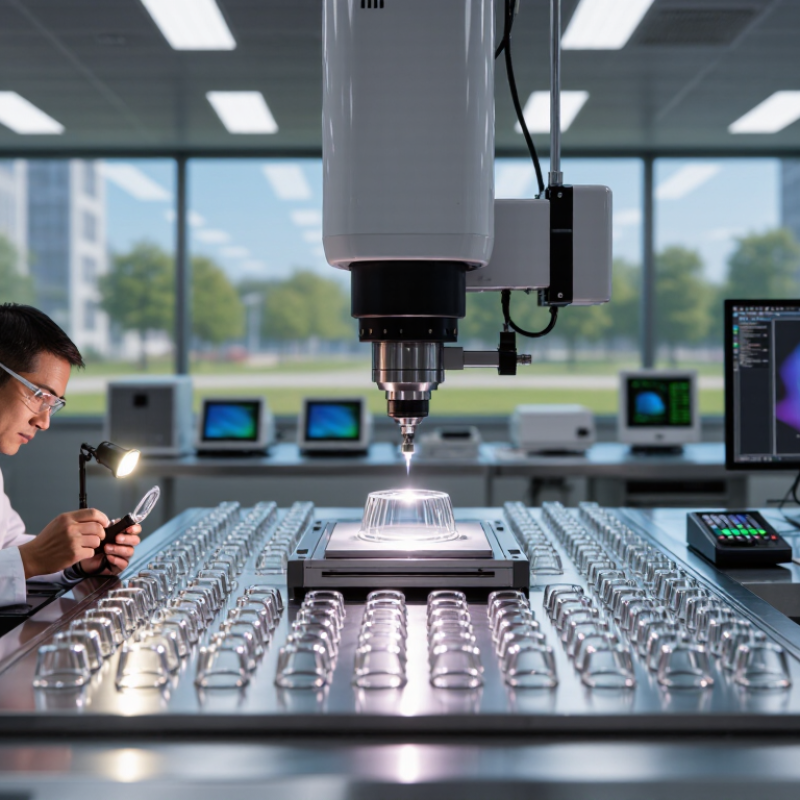
Freeform progressive lenses use digital surfacing to calculate thousands of prescription points. This process creates a more personalized lens surface than traditional fixed molds. The design supports distance, intermediate, and near vision within one lens. It can also reduce unwanted distortion near the edges. Small changes matter.
The World Health Organization reported that at least 2.2 billion people live with vision impairment worldwide. Its World Report on Vision also identified unaddressed refractive error as a major contributor. This need strengthens demand for accurate progressive designs. Grand View Research valued the global ophthalmic lenses market at approximately USD 55.66 billion in 2023. The report also expects continued growth through 2030, supported by digital manufacturing and aging populations.
In practical fitting, freeform technology uses prescription power, frame shape, fitting height, and wearing habits. A wider reading area may help office workers who shift between screens and documents. However, better calculations cannot correct poor measurements. A frame that sits unevenly can change the intended optical result. Patient adaptation still varies. Not magic.
Manufacturers should therefore be assessed through measurement accuracy, design flexibility, coating consistency, and quality control. Independent laboratory testing and documented tolerance standards strengthen reliability. Real-world wearer feedback also matters, although it is often less consistent than technical data. Some fitting problems remain difficult to predict. That limitation deserves honest attention when comparing the top ten manufacturers.
Key Criteria for Ranking Chinese Lens Manufacturers
Ranking China’s top free-form progressive lens manufacturers requires more than factory size or export volume. The first test is design accuracy. Manufacturers should demonstrate digital surfacing, individualized corridor control, and stable prescription data. ISO 8980-1 and ISO 8980-2 provide useful benchmarks for optical performance and tolerance. Independent testing matters more than marketing claims. It exposes hidden variation.
Production depth is another key criterion. A serious supplier should control blank selection, CNC surfacing, polishing, coating, inspection, and traceability. Grand View Research’s 2024 eyewear analysis identified Asia-Pacific as the largest regional market, reflecting strong production capacity and rising prescription demand.
However, market scale does not prove lens quality. That assumption needs questioning. A large plant may still produce inconsistent progressive zones.
Service evidence should influence the ranking. Review laboratories for remake rates, average delivery times, prescription range, and after-sales response. Ask for anonymized inspection records and sample lenses with corridor markings. Manufacturers meeting ISO 21987 requirements show stronger alignment with mounted-lens performance. Certifications should be current and independently verifiable. According to MarketsandMarkets’ optical lens market outlook, customization and digital manufacturing remain important growth factors through this decade. Yet public Chinese data is uneven, so rankings should disclose their scoring method. Price deserves less weight than repeatable optics, coating durability, and practical wearer adaptation.
Some conclusions will remain provisional. That is more credible.
China’s Top 10 Freeform Progressive Lens Manufacturers
China’s Top 10 Freeform Progressive Lens Manufacturers represent a competitive manufacturing sector.
These companies typically combine digital surfacing, prescription software, and strict optical inspection. Their freeform lenses can support customized corridors, wider reading zones, and smoother transitions between distances.
However, “top 10” should not mean a fixed ranking. A reliable evaluation needs production capacity, prescription accuracy, coating consistency, delivery records, and after-sales support.
In practical sourcing work, manufacturers deserve closer attention when they provide traceable quality reports and stable sample results. Ask for lens maps, fitting parameters, material data, and coating test details. A modern CNC generator is useful, but software calibration matters just as much. Some suppliers describe customization broadly, yet their actual fitting range may be limited. That gap deserves careful checking. It is easy to overlook.
Tips:
Request sample lenses with identical prescriptions. Compare corridor comfort, unwanted astigmatism, edge distortion, and surface appearance. Confirm whether measurements include monocular PD, fitting height, pantoscopic angle, and vertex distance. Keep written specifications for every batch. One more practical point: test lenses in real frames, not only on paper. A technically strong design may still feel uncomfortable when frame shape or fitting position changes.
Technology, Customization, and Production Capabilities Compared
China Top 10 Free Form Progressive Lens Manufacturers?
China’s leading ten free-form progressive lens manufacturers differ mainly in design software, customization, and production control. Grand View Research valued the global eyewear market at approximately US$157 billion in 2023, with continued growth expected through 2030. This demand favors manufacturers using digital ray tracing, wearer measurements, and prescription-specific corridor designs. Some factories now process thousands of personalized lens orders daily. That scale matters.
Technology is not evenly distributed. Advanced laboratories combine free-form surfacing, automated coating lines, and digital inspection systems. ISO 8980-2 sets requirements for progressive ophthalmic lens optical properties, while ISO 21987 addresses mounted spectacle lenses. These standards provide a useful comparison point.
However, certification alone does not prove better visual comfort. Corridor length, fitting height, pantoscopic angle, and real-world wearer feedback still require careful verification. This part is often underestimated.
Customization separates capable suppliers from volume-only producers. The strongest manufacturers can adjust addition power, near-zone width, inset, frame shape, and occupational viewing distance. According to Statista Consumer Insights, China remains one of the world’s largest eyewear consumption markets, creating strong pressure for faster delivery and broader prescription coverage.
Production capability also includes traceability, remake handling, coating consistency, and batch inspection. A factory may advertise five-axis surfacing, yet its customer data process can remain weak. That contradiction deserves attention. Buyers should request sample maps, tolerance records, customization menus, and independent verification before comparing the top ten.
How to Select the Right Chinese Progressive Lens Manufacturer
Selecting among China’s top ten free-form progressive lens manufacturers requires more than comparing prices. The WHO World Report on Vision estimates that at least 2.2 billion people have near or distance vision impairment, with about 1 billion cases preventable or unaddressed. This demand makes fitting accuracy essential. Ask each manufacturer for corridor lengths, fitting-height limits, design parameters, and documented remake rates.
A reliable supplier should provide progressive lens samples, power-mapping results, and wearer adaptation records. Check whether its quality system follows ISO 13485 principles and whether lenses meet ISO 8980-2 requirements for optical performance. Request recent third-party test reports, not only factory certificates. During a factory audit, inspect coating rooms, surfacing equipment, inspection lighting, and traceability labels. Small details matter. A scratched calibration tool can affect many orders.
Review technical support before signing a contract. Can the manufacturer adjust designs for high prescriptions, narrow frames, or Asian fitting characteristics? Confirm free-form software capabilities, order data security, packaging standards, and response times for remakes. Industry reports often show strong market growth, but growth does not prove consistency. I would test three batches from the same design and compare power, prism, coating adhesion, and edge thickness. Results may vary. That variation deserves discussion, not concealment. A lower quotation can become expensive when complaints, remakes, and delayed delivery accumulate.