10 Tips for Choosing the Right Spectacle Lenses for Your Needs
Choosing the right spectacle lenses is crucial for clear vision. With numerous options available, it can feel overwhelming. Everyone's needs vary based on lifestyle, age, and eye health.
Consider your daily activities. Do you work at a computer? Perhaps you need blue light-blocking lenses. If you enjoy outdoor activities, UV protection becomes essential. It's easy to overlook these specifics. Many ignore the impact of lens coatings, leading to poor vision adjustments.
Reflect on your comfort. Heavier lenses can cause discomfort over time. Choosing lighter materials might make a significant difference in wearability. Don’t rush the decision; take your time. Proper selection of spectacle lenses can improve your quality of life and enhance vision clarity.
Understanding Your Vision Needs and Lifestyle Preferences
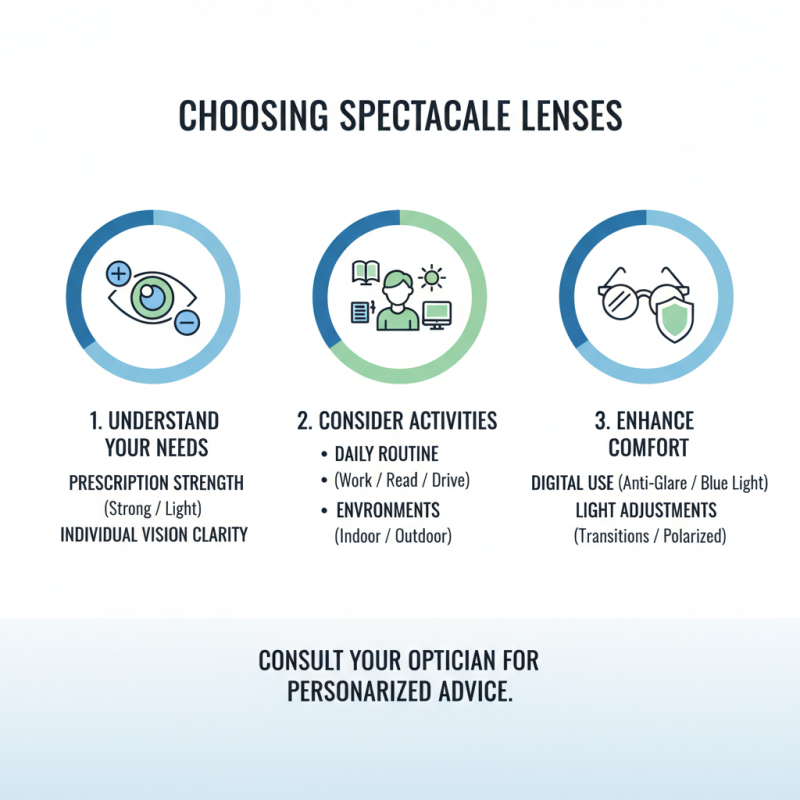
When choosing spectacle lenses, it's essential to understand your vision needs. Clear vision varies from person to person. Some may need strong prescriptions, while others prefer light adjustments for reading. Consider your daily activities and environments. Do you often work on a computer? You might need lenses that reduce glare and improve comfort.
Lifestyle preferences also play a crucial role. Are you an athlete who needs durable lenses? Or do you prefer lenses that transition from indoor to outdoor conditions? Each choice affects your comfort and clarity. Reflect on your habits. Do you spend more time outdoors or indoors? This can guide you toward suitable lens options. Remember, it's okay to take your time and think through these choices. Balancing vision correction with lifestyle is a thoughtful process.
Types of Spectacle Lenses: Single Vision, Bifocals, and Progressives
When it comes to spectacle lenses, understanding your options is crucial.
Single vision lenses are the most straightforward.
They correct vision at one distance, whether near or far. Many people choose them for reading or driving. These lenses
provide clarity but may not address all everyday needs.
Bifocal lenses offer a dual solution. They have two distinct prescriptions
within one lens. The top part is for distance vision, while the bottom is for close-up tasks. This design often causes a visible
line, which some users dislike. It's essential to consider comfort and aesthetics here.
Progressive lenses provide a more seamless transition between multiple focal points.
Unlike bifocals, they have no visible lines. Users can see clearly at any distance. However, they might take time to adjust to. Users
sometimes find peripheral vision challenging at first.
It’s a good idea to assess your daily activities and consult with an eye care professional. Each lens type has its strengths and weaknesses.
Choosing the right one requires thoughtful consideration.
Lens Material Options: Glass, Plastic, and Polycarbonate
When selecting spectacle lenses, the material plays a vital role in performance and comfort. Glass lenses offer excellent clarity and scratch resistance. They can be heavy and might break upon impact. For some, these drawbacks can be a deal-breaker. However, for those who prioritize optical quality, glass remains a favorite option.
Plastic lenses are lighter and offer good optical performance. Their flexibility makes them less likely to shatter. Yet, they are more prone to scratches compared to glass. Some users might ignore the importance of lens coating, which can enhance durability and reduce glare. It’s a small detail that can make a big difference.
Polycarbonate lenses are known for their impact resistance. They are much thinner and lighter than glass. This makes them a popular choice for active lifestyles. However, they might compromise a bit on clarity. Choosing the right material involves weighing personal needs against the performance characteristics of each option. Many people overlook these factors, leading to less-than-ideal choices. Consider your daily activities and preferences carefully before making a decision.
Choosing the Right Lens Coatings for Enhanced Vision and Durability
Choosing the right lens coatings is crucial for enhancing vision and durability. Many options are available.
Anti-reflective coatings can improve clarity. They reduce glare from screens and bright lights.
This feature is especially beneficial for night driving or working at a computer.
Scratch-resistant coatings protect lenses from everyday wear. They are essential for active lifestyles.
Children and pets can be rough on eyewear. While these coatings help, they are not indestructible.
People often expect them to withstand any impact. That's unrealistic. Regular lens care is still necessary to maintain quality.
UV protection is another important consideration. It helps shield your eyes from harmful rays.
Prolonged exposure to UV light can lead to serious eye problems. Consider polarization if you enjoy outdoor activities.
This coating reduces glare from reflective surfaces, like water or roads.
However, some users find polarized lenses alter their perception. It’s essential to test them before committing.
Lenses should enhance your vision, not hinder it.
Consulting with an Eye Care Professional for Personalized Recommendations
When it comes to choosing spectacle lenses, personalized recommendations are crucial. Consulting an eye care professional ensures you receive tailored advice based on your unique vision needs. Nearly 75% of individuals require some form of vision correction, according to the American Optometric Association. Ignoring expert guidance can lead to suboptimal choices that negatively impact your daily life.
Eye care professionals conduct comprehensive exams to assess your vision and lifestyle. They can recommend lenses that suit your working environment, whether it's for digital screens or outdoor activities. For instance, blue light blocking lenses can significantly reduce eyestrain from prolonged exposure to screens. A report from the Vision Council found that 60% of adults spend more than six hours a day on digital devices. Yet, many overlook the importance of protective lenses.
Choosing the wrong lenses can lead to discomfort. For example, if your job requires sharp distance vision, but you're using bifocal lenses designed for reading, you may struggle. The wrong prescription can contribute to headaches and fatigue. A thorough consultation can help identify these pitfalls, ensuring you find the right solution for your vision issues. It's a small step that can make a big difference in your comfort and quality of life.