How to Source Freeform Progressive Lenses in 2026? This question reaches beyond price lists and attractive catalog images. Freeform Progressive Lenses are digitally surfaced for individual prescriptions, frame measurements, and visual demands. Their value depends on design accuracy, fitting support, production control, and wearer adaptation.
The World Health Organization’s World Report on Vision estimates that at least 2.2 billion people live with near or distance vision impairment. Holden and colleagues projected that presbyopia could affect 1.8 billion people globally by 2050, according to Ophthalmology. These figures suggest expanding demand, but demand alone does not guarantee a reliable supplier. Vision scientist Mark Bullimore, PhD, has described presbyopia as “a universal age-related loss of accommodation.” That simple statement explains the opportunity. It also exposes a sourcing risk.
A practical 2026 evaluation should examine corridor options, fitting algorithms, prescription limits, lens materials, coating performance, remake policies, and delivery consistency. Ask suppliers for measured samples, not only digital renderings. Check whether their software accepts accurate monocular PD, fitting height, pantoscopic tilt, and vertex distance. Review traceability from design file to finished lens. Independent quality testing matters. So does responsive technical support.
Some buyers may overvalue a low unit cost. I have seen how that decision can create hidden expenses through remakes, delayed jobs, and dissatisfied patients. The better question is not, “Who is cheapest?” It is, “Who can repeatedly deliver the promised design?” Reports provide useful direction, but supplier audits reveal the uncomfortable details. Numbers help. Verification decides.
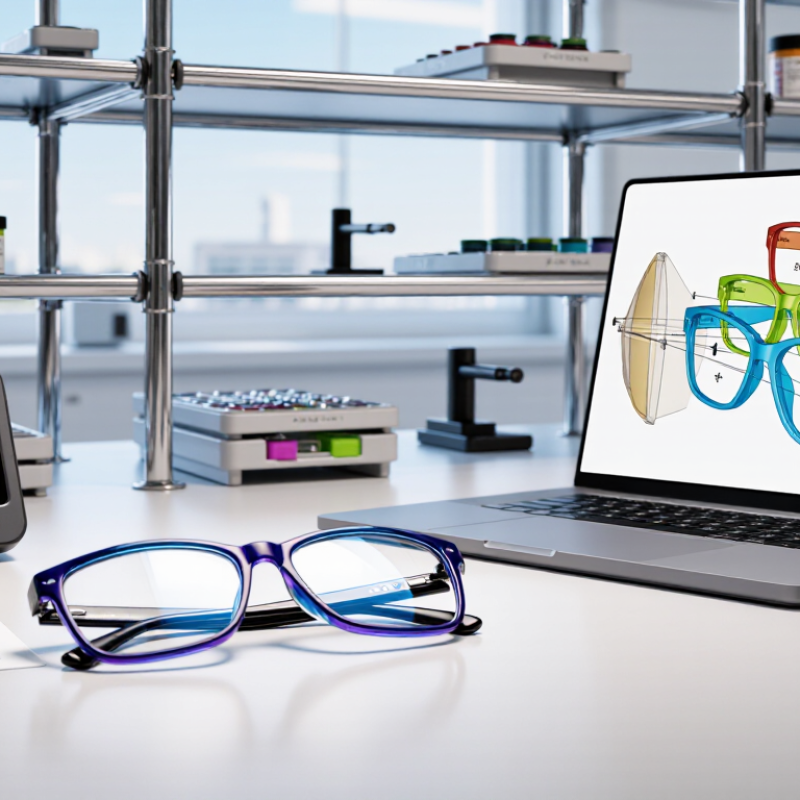
A clear 2026 brief should specify 1.50–1.74 index materials and add powers from +0.75 to +3.50 D. These figures define the sourcing range, but they do not guarantee comfortable vision. Request verified fitting data, including monocular PD, fitting height, vertex distance, pantoscopic tilt, and frame wrap. Freeform calculations depend on these details. A small measurement error can shift the near zone noticeably.
Tips: Ask each laboratory for material options, design parameters, minimum order quantities, and current production times. Confirm whether the quoted index applies across the full add-power range. Request a technical drawing or sample lens when possible. Check edge thickness on a realistic prescription, not only a standard test power. An experienced optician should review the final fitting report before approval.
I would also compare 1.60, 1.67, and 1.74 carefully. Higher index may reduce thickness, yet it can increase reflections, cost, or chromatic effects. The lightest option is not always the best option. For moderate prescriptions, 1.50 or 1.60 may provide better value and visual balance. For stronger powers, 1.67 or 1.74 could be more practical, depending on frame size and prescription. Keep records of remakes and wearer feedback. That evidence is more useful than a polished specification sheet. I have found that sourcing decisions sometimes look precise, but real-world fitting exposes missing details.
How to Source Freeform Progressive Lenses in 2026?
Accurate sourcing begins with five fitting inputs: monocular PD, height, vertex distance, tilt, and wrap. Measure each eye separately, because facial asymmetry is common. Record height from the fitting cross position, not from the frame edge. A stable frame matters. If it shifts during measurement, the data becomes unreliable.
Vertex distance should be measured in millimeters with the frame worn naturally. Note pantoscopic tilt and face-form wrap using a fitting device or calibrated digital system. These angles affect how the wearer reaches intermediate and near zones. In my dispensing experience, even a small tilt difference can change comfort. I still recheck unusual measurements. Human posture is not perfectly repeatable.
Tips: Use a clear measurement record. Photograph the fitted frame when permitted. Confirm monocular PD twice. Ask the wearer to look straight ahead. Check that the bridge sits evenly and the temples do not press. When sourcing freeform lenses, send the complete prescription, frame dimensions, and all five fitting values. Do not substitute a previous order automatically. It may fit differently in a new frame. A rushed measurement can look precise on paper, yet perform poorly on the face. Allow time for one final comparison before submitting the order.
Capture Five Fitting Inputs: Monocular PD, Height, Vertex, Tilt, and Wrap
The chart shows commonly encountered measurement ranges used when collecting digital progressive-lens fitting data. Monocular PD and fitting height are recorded in millimeters, while vertex distance, pantoscopic tilt, and face-form wrap are captured using their respective fitting units. The values are intended as practical capture references and should be verified against the measurement device and lens-design requirements.
Sourcing freeform progressive lenses in 2026 requires more than comparing prices or corridor designs. Screen each laboratory against ISO 8980-1, ISO 8980-2, and ANSI Z80.1. ISO 8980-1 addresses refractive power, prism, and surface quality. ISO 8980-2 is especially relevant to progressive lenses, including power variation and unwanted astigmatism. ANSI Z80.1 adds practical requirements for prescription lenses in the United States.
Request current test reports, not marketing summaries. Check whether reports identify the exact lens design, material, coating, and measurement method. Ask for batch traceability and retained samples. A useful audit should measure sphere, cylinder, addition power, prism, and optical center position. Small errors can become noticeable when a wearer reads at 40 centimeters. They can also affect adaptation complaints.
The Vision Council’s 2023 Consumer inSights report estimated that 64% of U.S. adults wear eyeglasses, creating a large quality-sensitive market. That figure supports stricter supplier screening, but it does not prove every wearer needs the same design. A laboratory may pass ISO testing while producing inconsistent edging results. That weakness is easy to miss. My practical preference is to compare three consecutive batches, using identical prescriptions and inspection conditions. The process is not perfect. Human measurements, fitting heights, and real-world posture still introduce uncertainty. Record every deviation, investigate repeated failures, and treat unusually low pricing as a question rather than an advantage.
How to Source Freeform Progressive Lenses in 2026?
A reliable sourcing process starts with the wearer’s real visual routine. Record reading distance, screen height, driving habits, and working posture. Corridor length should match that routine, not merely the prescription. A shorter corridor can support near access in compact frames. A longer corridor may provide smoother intermediate vision. Neither option is automatically better. Frame height, fitting accuracy, and adaptation also matter.
Task distance deserves closer attention. A person using a laptop at 60 centimeters needs different priorities from someone reading at 40 centimeters. Ask for specific distances, then compare the usable viewing zones on the design chart. Look for stable intermediate width, controlled distortion, and comfortable eye movement. Request documented fitting tolerances from the laboratory. Small errors in monocular measurements can become obvious during binocular viewing.
Binocular balance is often overlooked. Compare right and left corridor behavior, inset, and prescribed power distribution. A balanced design should reduce unwanted head movement and inconsistent clarity between eyes. Have a qualified eye-care professional verify pupillary measurements, fitting height, and frame adjustment before ordering. Keep a remake record with the original measurements and wearer feedback. That evidence improves future sourcing decisions. In practice, “freeform” does not guarantee comfort. I would question any supplier promising universal success. Some designs look impressive on paper but perform poorly when the wearer’s posture changes. A brief real-world trial can reveal more than a polished specification sheet.
Sourcing freeform progressive lenses in 2026 requires more than uploading a prescription. Before ordering, confirm every power value, including sphere, cylinder, axis, addition, and fitting height. Digital measurements can reduce errors, but they are not automatically accurate. Check the pupillary distance for each eye. Record the frame’s bridge, eyewire shape, and pantoscopic angle. Small details matter.
Prism needs careful verification. Ask whether the prescription includes prescribed prism, induced prism, or both. Confirm the direction and measurement method, such as prism diopters by horizontal or vertical reference. A written verification sheet helps prevent confusion between right-eye and left-eye values.
My early mistake was trusting a single screen preview. The numbers looked correct, but the fitting height had shifted by two millimeters. That was enough to question the final result.
Impact testing also deserves written confirmation. Ask which lens material and thickness meet the required safety standard for the intended use. Do not assume every progressive design receives the same testing treatment. Request test documentation when appropriate.
Remake terms should be equally clear: allowable prescription tolerance, non-adapt policy, reporting deadline, shipping responsibility, and exclusions for frame changes. Get these terms before payment. Vague promises create expensive disputes.
I still leave room for review, because measurements can be incomplete, and even a careful ordering process may need correction.