What is Lens Index Meaning in Optical Products?
Understanding the "Lens Index Meaning" is crucial in the optical products industry. The lens index refers to the refractive index of a material. It determines how much light bends when entering the lens. According to the American Optometric Association, a higher lens index often means thinner and lighter lenses. This is particularly important for individuals requiring strong prescriptions.
The optical industry is valued at over $130 billion globally, with engineered materials improving lens quality. High-index lenses, generally those with indices above 1.56, can significantly reduce lens thickness. This benefit attracts eyewear consumers who prioritize comfort and aesthetics. However, many consumers misunderstand the trade-offs associated with lower-quality materials too.
Incorporating lenses with an appropriate index can enhance visual clarity. Yet, not all high-index lenses are optimal for every individual. Users must evaluate their unique needs. A balance between lens index and price can be challenging. As technology evolves, understanding lens index meaning will remain essential for both consumers and professionals in the optical space.
What is Lens Index in Optical Products?
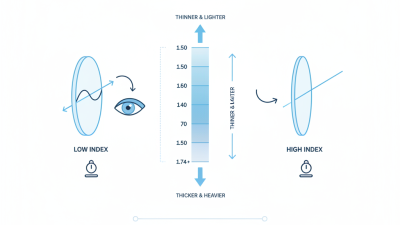
In optical products, the lens index represents the refractive index of lens materials. A higher lens index means better light refraction. This is key for prescription eyewear, as it impacts thickness and weight. According to industry reports, lenses with a higher index often reduce distortion and improve aesthetics. For instance, lenses with an index of 1.74 are thinner than those at 1.50, offering a more attractive profile.
Choosing the right lens index is crucial. A higher index lens can improve comfort and wearability, especially for stronger prescriptions. However, it comes at a cost. Some users may not notice the benefits of the extra investment. Thus, potential buyers should weigh their options carefully. The right decision offers both visual clarity and comfort.
Tip: Always consult with a professional before selecting lenses. Understanding your prescription needs is essential. Remember, not all high-index lenses suit everyone. Some users may prefer managing thickness over investing in a more expensive lens. Consider your lifestyle, and ensure your choice fits your daily activities and visual demands.
Understanding the Importance of Lens Index
When it comes to optical products, the
lens index plays a crucial role. The lens index refers to the refractive index of a lens material, determining how much light is bent as it passes through.
Higher index lenses are thinner and lighter. This is particularly important for people with strong prescriptions who want stylish eyewear without the bulk.
Understanding the importance of lens index helps in making informed choices.
A higher index lens can enhance visual comfort and reduce distortion.
For example, a 1.74 index lens is much thinner compared to a standard 1.5 index lens.
Lightweight lenses can also alleviate pressure on the nose and ears, making them more comfortable to wear.
Tips: Always consider your prescription strength when choosing a lens index. A higher index may not be necessary for mild prescriptions.
Regularly check your eyewear for any signs of wear and tear. Frequent adjustments can improve your comfort.
Don't hesitate to consult an optical professional for tailored advice.
Different Lens Index Values and Their Significance
The lens index is crucial in optical products, particularly for eyewear. The index indicates the lens material’s ability to refract light. Higher index values allow for thinner and lighter lenses. For instance, a lens with an index of 1.67 will be noticeably slimmer than one with an index of 1.50. This factor significantly enhances comfort, especially for strong prescriptions.
Different lens index values serve various needs. A 1.50 index is commonly suitable for mild prescriptions. It is affordable and offers adequate weight distribution. In contrast, higher index lenses, such as 1.74, cater to those with stronger prescriptions. They reduce bulk and improve aesthetics. However, the trade-off includes potential reflections and glare, so coatings might be necessary.
When selecting a lens index, it’s essential to consider lifestyle and personal preferences. Some may prioritize aesthetics, while others focus on comfort. There’s often a balance to strike. Understanding these differences helps users make informed decisions. Reflecting on lens choices can lead to better vision experiences.
What is Lens Index Meaning in Optical Products? - Different Lens Index Values and Their Significance
| Lens Index |
Material |
Weight (g) |
Thickness (mm) |
UV Protection |
| 1.50 |
CR-39 Plastic |
20 |
2.0 |
Yes |
| 1.56 |
Polycarbonate |
18 |
1.8 |
Yes |
| 1.61 |
High-Index Plastic |
16 |
1.6 |
Yes |
| 1.67 |
Super High-Index Plastic |
14 |
1.5 |
Yes |
How Lens Index Affects Lens Thickness and Weight
The lens index is a critical factor in the optical product industry. It defines the refractive index of the lens material. A higher index indicates stronger light-bending capabilities. This strength allows for thinner and lighter lenses, which is crucial for comfort and aesthetics.
Lenses with a high index (1.67 or 1.74) can be up to 30% thinner than standard lenses (1.50). This reduction in thickness often results in a lighter product, enhancing wearability. This is particularly important for those with high prescriptions, as thick lenses can be heavy and uncomfortable. According to the American Optometric Association, lens weight can significantly affect the overall experience. A lighter lens reduces pressure on the nose and ears.
However, it is essential to balance lens thickness and optical quality. High-index lenses may sometimes compromise durability. This trade-off means that while consumers enjoy lighter lenses, they must also consider their longevity. Not every wearer needs high-index lenses, especially if their prescription is mild. Educating consumers on these trade-offs is imperative. The right choice requires understanding personal needs and priorities in lens performance.
Choosing the Right Lens Index for Your Prescription Needs
Choosing the right lens index is crucial for optimal vision correction. The lens index reflects the lens material's refractive power, influencing the lens thickness and weight. For instance, a higher index lens (such as 1.74) is thinner and lighter compared to a standard index lens (1.50). According to recent studies, nearly 50% of eyeglass wearers prefer high-index lenses for improved aesthetics and comfort.
Those with stronger prescriptions often face challenges with conventional lenses. High-index lenses can reduce visual distortion and enhance clarity. A report by the Optical Manufacturers Association noted that wearers of high-index lenses reported 30% less lens weight, significantly improving daily wearability. It's essential to evaluate individual needs when selecting the lens index.
However, not all high-index materials are suitable for every individual. Some may experience glare or reflections that can hinder vision. A thorough eye examination is vital before making a decision. This ensures that the selected lens fits well with one's lifestyle and prescription requirements. Ultimately, understanding lens index can lead to better choices in managing vision health.