2026 How to Choose Ultra High Index Lenses for Your Glasses?
Choosing the right eyewear can be challenging. One important option to consider is Ultra High Index Lenses. These lenses are designed for people who need strong prescriptions. They are thinner and lighter than regular lenses, offering improved comfort.
Ultra High Index Lenses can transform how you wear glasses. They help reduce the "coke bottle" effect often seen with high prescriptions. This feature enhances your appearance and boosts confidence. However, not all lenses are created equal. Sometimes, the price may be higher than standard lenses.
It is essential to weigh the benefits against your needs. Imagine walking into a room and feeling good about what you see. Yet, the decision involves more than just aesthetics. The lens material, coatings, and frame style all play crucial roles. Finding the perfect pair takes time and thought.
Understanding Ultra High Index Lenses and Their Advantages
Ultra high index lenses have changed the eyewear world. They are designed for people with strong prescriptions. These lenses can have an index of refraction exceeding 1.67. This means they are thinner and lighter than traditional lenses, which can be quite bulky.
A report by the Vision Council states that around 30% of adults require some form of vision correction. For those with higher prescriptions, ultra high index lenses are a game-changer. They reduce lens thickness by about 30% compared to standard plastic lenses. This reduction can make a significant difference in comfort and aesthetics. People often hesitate to switch due to costs and lack of awareness.
However, these lenses also have limitations. They can be more fragile than regular lenses. Some users report they can distort vision at the edges. It’s essential to discuss these concerns with an eye care professional. A detailed fitting process is crucial. Everyone's vision needs are different, and mistakes can lead to dissatisfaction. Understanding the balance between weight, thickness, and optical quality is key.
2026 How to Choose Ultra High Index Lenses for Your Glasses?
| Lens Index |
Thickness (mm) |
Weight (grams) |
Prescription Range |
Advantages |
| 1.67 |
4.0 |
10 |
-6.00 to +4.00 |
Thin and lightweight design |
| 1.74 |
3.5 |
8 |
-8.00 to +5.00 |
Ultra-lightweight, best for high prescriptions |
| 1.59 |
5.0 |
12 |
-4.00 to +3.00 |
Affordable, good for moderate prescriptions |
| 1.60 |
5.2 |
11 |
-4.00 to +4.00 |
Balanced performance and cost |
| 1.50 |
6.0 |
14 |
-2.00 to +2.00 |
Standard lens option, most commonly available |
Factors to Consider When Choosing Ultra High Index Lenses
When selecting ultra high index lenses, there are important factors to consider. These lenses are ideal for strong prescriptions due to their thinner profile. Individuals with prescriptions higher than -4.00 or +4.00 diopters often benefit the most. Reports indicate that these lenses can reduce lens thickness by up to 50%, making them more comfortable to wear.
One key factor is the lens material. High index materials have different refractive indices. For example, a lens with a refractive index of 1.74 is thinner than one with 1.67. Consider your lifestyle as well; active individuals may prefer lenses that are more durable.
Tips: Always prioritize scratch resistance and weigh lens coatings. Anti-reflective coatings can enhance vision clarity. They reduce glare and improve aesthetics.
Another aspect is the frame selection. Ultra high index lenses are versatile but require compatible frames. Narrow frames work well, but ensure they don't compromise comfort. Choosing the right tint or photochromatic feature can also enhance visual comfort.
Tips: Consult an eye care professional for personalized recommendations. They can guide you in aligning your prescription with the ideal lens choice. It’s crucial to remember that not all lenses suit everyone equally. Reflect on your unique needs for the best outcome.
Comparing Different Ultra High Index Lens Materials
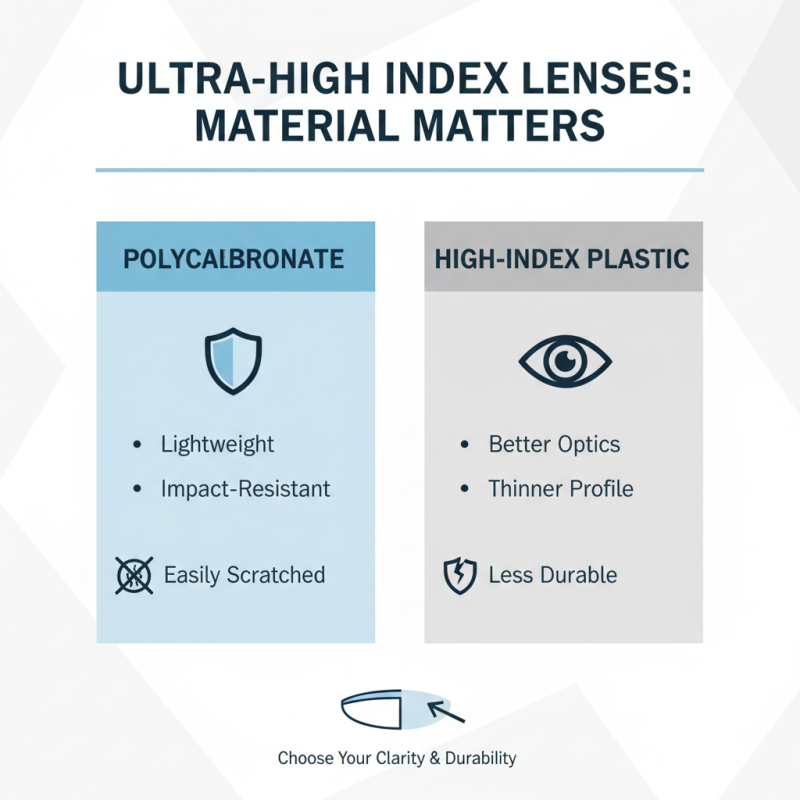
When it comes to choosing ultra high index lenses, material matters. The most common materials include polycarbonate and high index plastic. Polycarbonate lenses are lightweight and impact-resistant. However, they can scratch easily. High index plastic offers better optics and thinner profiles. Yet, they may not provide the same durability.
Consider your lifestyle before making a decision. If you lead an active life, polycarbonate might be a better choice. It withstands daily wear and tear. However, if aesthetics are your priority, high index lenses will give you a sleeker look. Balancing style and comfort can be tricky here. Each material has trade-offs.
Don’t forget about lens coatings. Anti-reflective coatings can enhance vision clarity. But they might add to the upkeep. While many prefer low-maintenance styles, lens care can be a nuisance. Reflect on your needs carefully. The right lens material can make a difference in your daily experience. Choose wisely.
Prescription Requirements for Ultra High Index Lenses
When selecting ultra high index lenses, it’s essential to understand prescription requirements. These lenses are designed for those with strong prescriptions. Usually, if your prescription is -4.00 diopters or more, consider ultra high index options. They are thinner and lighter, making them comfortable for daily wear.
Tips: Consult with your eye care professional. They can recommend the best lens type for your specific prescription. A high index lens can reduce distortion and improve your overall visual experience. Choosing the right lens involves balancing comfort, thickness, and clarity.
Pay attention to lens coatings too. Anti-reflective coatings are beneficial. They reduce glare and improve visibility, especially at night. Not everyone realizes how much lens indexes vary. Sometimes, what might seem adequate isn't. Don't hesitate to seek clarification on options available to you. The right choice can significantly impact your experience and satisfaction.
2026 Ultra High Index Lenses Prescription Requirements
This bar chart illustrates the prescription requirements for various ultra high index lenses, showcasing the number of users who prefer each index. As the lens index increases, a notable rise in preference is observed, indicating a trend towards higher index lenses among consumers seeking thinner and lighter eyewear options.
Care and Maintenance Tips for Ultra High Index Lenses
Ultra high index lenses are a great choice for strong prescriptions. However, maintaining them can be tricky. Regular care ensures clarity and longevity. These lenses are thinner and lighter, but they require specific attention.
Cleaning is crucial. Use a microfiber cloth to prevent scratches. Avoid rough materials. Simple soap and water can work wonders for stubborn smudges. Don't use any household cleaners, as they may damage the coating. Consistency is key.
While ultra high index lenses are durable, they are not indestructible. Be cautious with extreme temperatures. Hot cars can warp lenses. Invest in a sturdy case for storage. Remember, neglecting care leads to more frequent replacements. Sometimes, taking small steps can save you big in the long run.