How to Choose Digital Freeform Progressive Lenses for Your Eyewear Needs?
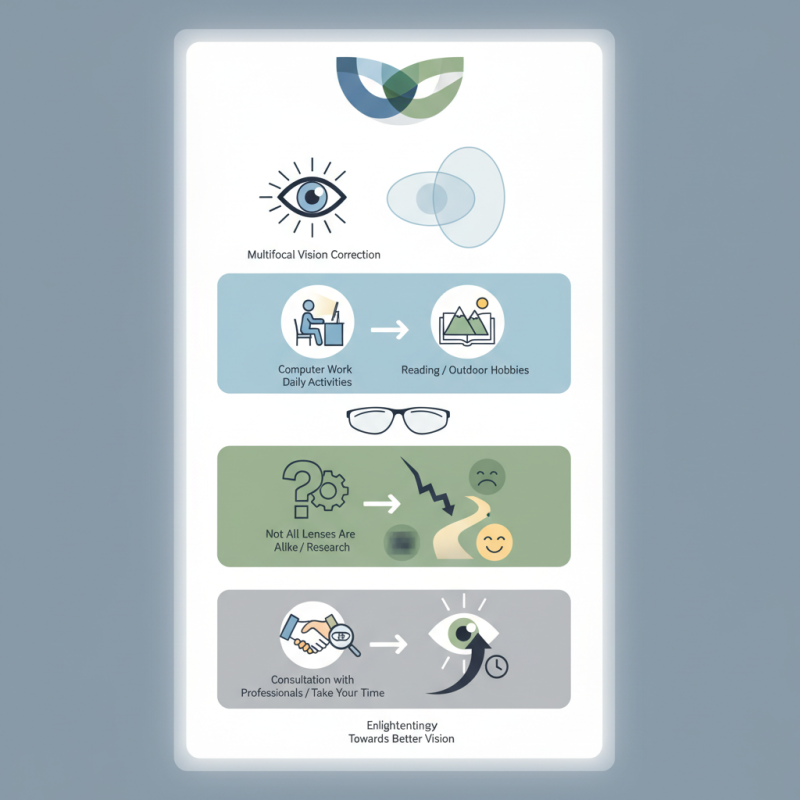
Choosing the right eyewear can be daunting. Digital Freeform Progressive Lenses offer a modern solution for those needing multifocal vision correction. They adapt to your unique prescription and lifestyle, providing clearer vision at all distances.
When selecting Digital Freeform Progressive Lenses, consider your daily activities. Do you work on a computer for hours? These lenses can help reduce eye strain. Think about your hobbies as well. Whether you enjoy reading or outdoor activities, the right lenses can enhance your experience.
However, not all Digital Freeform Progressive Lenses are alike. As you explore options, it’s vital to know your specific needs. A lack of awareness could lead to dissatisfaction. Take your time to research and consult with professionals to find the perfect fit. Finding the right pair shouldn’t be rushed. Rather, it should be an enlightening journey towards better vision.
Understanding Digital Freeform Progressive Lenses and Their Benefits
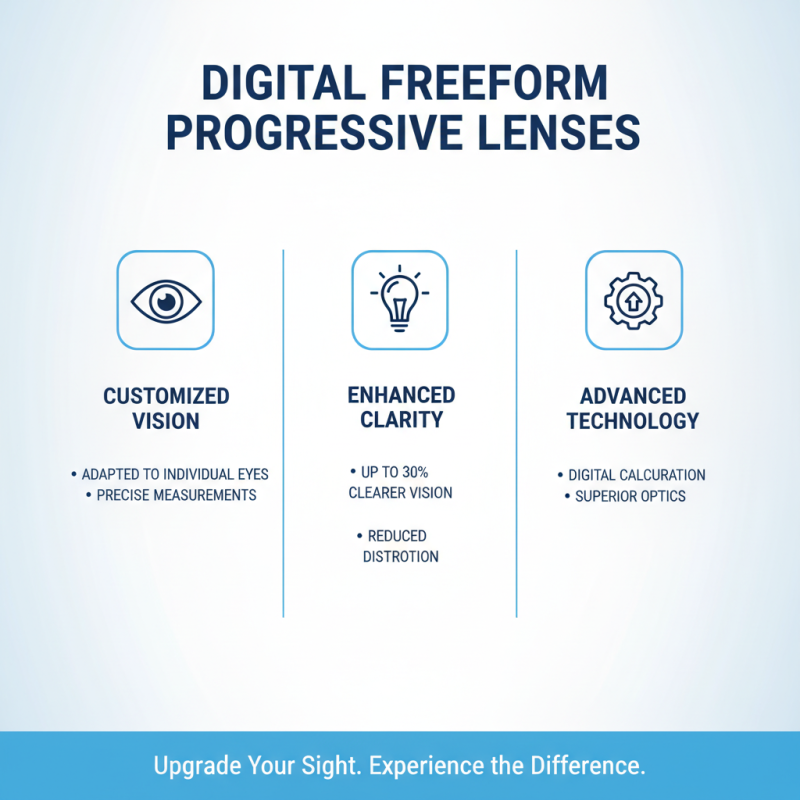
Digital freeform progressive lenses offer several advantages for those in need of vision correction. These lenses provide a custom-fitting solution that adapts to individual visual requirements. Compared to traditional progressive lenses, digital freeform lenses use advanced technology to calculate precise measurements for the wearer’s eyes. According to the Vision Council, these lenses can improve visual clarity by up to 30%.
Another key benefit is their tailored design. Digital freeform technology allows for personalized adjustments in various areas of the lens, such as the corridor length and distance prescription. This customization results in a smoother transition between different vision zones. A report from the American Optometric Association indicates that over 60% of wearers experience reduced distortion compared to standard lenses. However, many users need time to adjust to these modern designs.
While digital freeform lenses enhance comfort and vision, challenges remain. Users may face issues such as adaptation difficulties. A survey found that 20% of wearers report discomfort during the initial adjustment period. It's essential to consider these factors when choosing lenses. Personalized consultations with professionals can help mitigate these issues.
Key Features to Consider When Choosing Progressive Lenses
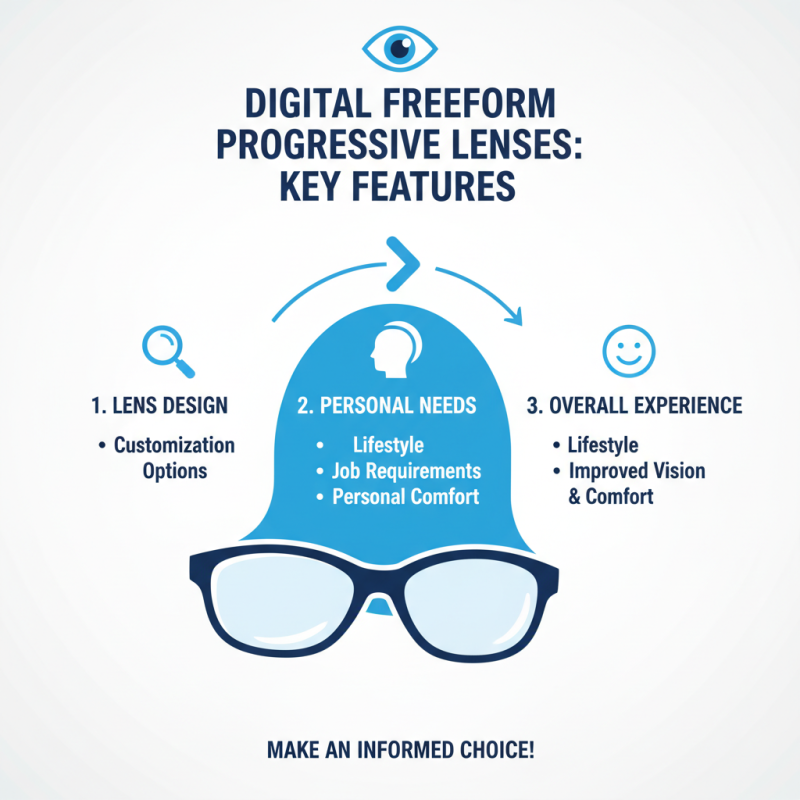
Choosing digital freeform progressive lenses can be a daunting task. Understanding key features will make your decision easier. Firstly, consider the lens design. Customization options play a vital role. When you select a lens that suits your specific needs, it improves your overall experience. Your lifestyle, job requirements, and personal comfort should influence your choice.
Tip: Always try on different lenses before deciding. This helps you feel the differences in clarity and comfort. You might notice that some lenses offer wider fields of view. This can be crucial if you often switch between tasks.
Another important feature is material. Lightweight options can significantly enhance comfort during prolonged use. Check for coatings too. Anti-reflective and scratch-resistant coatings add value.
Tip: Keep in mind your daily activities. Your lenses should be adaptable, preventing distortions during movement. Remember, it's okay to revisit your choices later. If something doesn't feel right, adjustments can be made.
Identifying Your Prescription Needs for Optimal Lens Selection
When selecting digital freeform progressive lenses, understanding your prescription is crucial. Your prescription reveals your vision needs. Whether you are nearsighted, farsighted, or have astigmatism, knowing these factors is essential. Each prescription is unique. It often includes details like sphere, cylinder, and axis measurements. Misunderstanding these can lead to poor lens choices.
Consider your daily activities. Do you work on a computer often? Maybe you need a specific zone for digital tasks. Some lenses offer designs tailored for screens. Others may focus on outdoor visibility. Think about your environment too. Bright lights and reflections matter. If you often drive at night, low-light performance is key. Testing lenses in various situations can help you identify the best fit.
Reflect on your comfort levels as well. Everyone has different preferences. Some may find wider viewing areas more comfortable, while others prefer a more compact design. Don't be afraid to try multiple pairs. It can take time to find what feels right. Exploring different options allows for personal growth in your eyewear journey.
Evaluating Frame Compatibility for Digital Freeform Lenses
Choosing the right frame for digital freeform progressive lenses can be tricky. The design of the frame plays a crucial role in how lenses perform. A well-fitted frame enhances the visual experience. Conversely, an ill-fitting frame may lead to discomfort or distorted vision. It is essential to find a balance between style and functionality.
Consider the lens height when selecting a frame. A low lens height might compromise the lens advantages. The shape of the frame is also vital. Certain shapes accommodate progressive lenses better than others. If the frame is too small or too wide, the lenses may not provide the necessary zones for clear vision.
Keep in mind that some frames may not work with specific lens types. Aesthetic appeal should not overshadow practicality. Frequent adjustments may be required if the fit is not right. It is important to prioritize comfort and clarity. This decision can impact daily activities, from reading to driving. Don't underestimate the significance of frame compatibility in achieving an optimal eyewear experience.
How to Choose Digital Freeform Progressive Lenses for Your Eyewear Needs? - Evaluating Frame Compatibility for Digital Freeform Lenses
| Lens Type |
Frame Compatibility |
Recommended Frame Shape |
Lens Material |
Coating Options |
| Digital Freeform Progressive |
Full-rim, Half-rim |
Rectangle, Oval |
Polycarbonate |
Anti-reflective, Scratch-resistant |
| Standard Progressive |
Full-rim only |
Square, Cat-eye |
CR-39 |
UV protection, Tints |
| Custom Digital Lenses |
Full-rim, Rimless |
Oval, Wraparound |
High-index |
Blue light blocking, Photochromic |
| Short Corridor Progressive |
Full-rim, Half-rim |
Narrow frames |
Polycarbonate |
Anti-fog, Mirror |
Consulting with an Eye Care Professional for Personalized Advice
When considering digital freeform progressive lenses, consulting an eye care professional is crucial. They can assess your unique vision needs. Every individual has different preferences and vision requirements. An expert can guide you through various options based on your lifestyle.
Tips: Always share your daily activities with your eye care provider. This helps them recommend the best lens design. Whether you spend long hours at a computer or enjoy reading, this detail matters. You might also want to try on different lens samples. This can give you a feel for comfort and clarity.
Remember, not all progressive lenses are created equal. Sometimes, you may not immediately feel a perfect fit. It’s essential to discuss any discomfort with your eye care professional. They can make adjustments if needed. Regular follow-ups can ensure your lenses accommodate changing vision needs effectively.
Choosing Digital Freeform Progressive Lenses: Key Factors