Choosing a Glass Lens manufacturer involves more than comparing prices or browsing product photos. Buyers need to assess optical performance, manufacturing consistency, customization options, and delivery reliability. A lens may look flawless under showroom lighting, yet small surface defects can affect image quality in demanding applications. Small differences matter. This guide introduces seven manufacturers for global buyers and outlines practical points to consider when evaluating them.
The comparison focuses on factors buyers can verify, including available materials, coating capabilities, quality-control processes, production capacity, and export support. It also considers whether a supplier can provide clear technical documentation and respond to questions about tolerances or inspection methods. Fit comes first. A laboratory, camera maker, and industrial equipment company may need very different specifications. The companies featured here are not a universal ranking, and supplier information can change over time. Buyers should confirm current capabilities, sample quality, lead times, and commercial terms directly with each manufacturer. That is not everything. Communication during sampling can reveal gaps that a polished catalog will not. Use this overview as a starting point, then compare each supplier against your application, budget, and required performance.
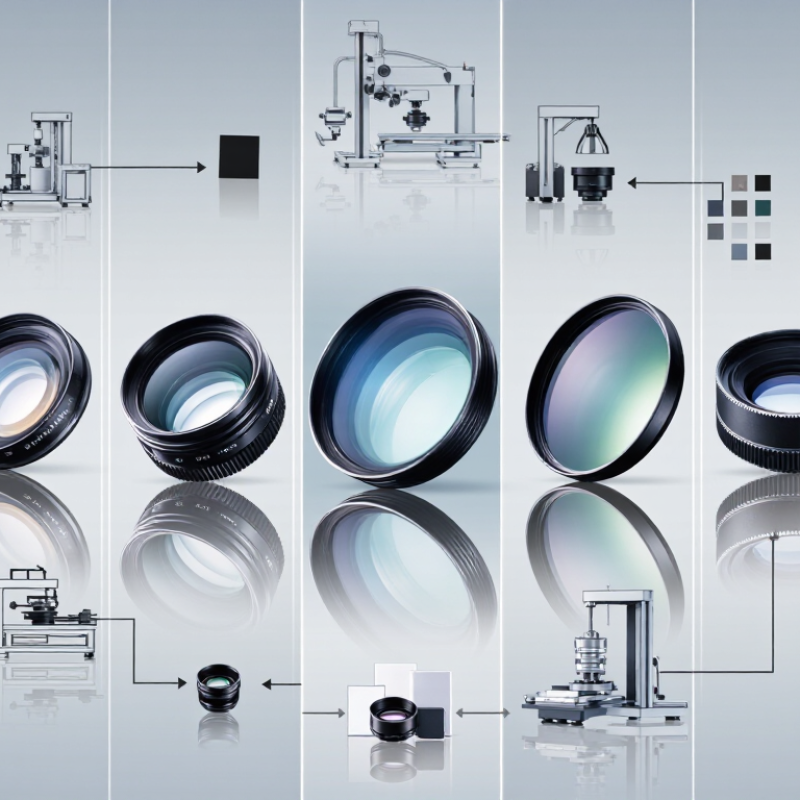
Glass lens manufacturers supply more than finished eyewear lenses. Some produce optical blanks; others grind, polish, coat, and inspect lenses to order. Precision optics for cameras, instruments, and medical equipment may require tighter surface tolerances than everyday prescription lenses. The difference is visible in production details: edge finish, centering, coating uniformity, and how consistently a batch matches its specification.
Materials and design shape performance. Crown glass offers stable optical properties, while higher-index glass can make some prescriptions thinner, though it may increase reflections without suitable coatings. Aspheric surfaces can reduce distortion in certain designs. A market estimate from Grand View Research put the global optical lens market at USD 18.54 billion in 2023, reflecting broad demand across vision care and other applications. Market size alone, however, says little about a factory’s process control. A polished sample can look flawless.
Tips: Ask for the refractive index, coating details, allowable tolerances, and inspection method. Request a sample from a production batch, not only a showroom piece. Then compare edge quality under bright side lighting. One detail is easy to overlook: confirm whether quoted tolerances apply to each lens or the batch average. That distinction can matter.

A reliable glass-lens supplier should show measurable process control, not just polished samples. Request inspection records for each production lot, including refractive accuracy, surface defects, coating consistency, and dimensional tolerances. Ask how rejected pieces are recorded and whether corrective actions can be traced to a specific batch. A clear answer matters. The ISO Survey of Management System Standard Certifications 2022 recorded more than 1.26 million ISO 9001 certificates worldwide. Certification can signal established quality processes, but it does not prove that every lens meets your specification.
Capacity needs evidence too. Compare quoted lead times with recent delivery records, monthly output, equipment availability, and the supplier’s plan for handling urgent orders. Ask to see a pilot batch before committing to volume. Check whether inspection tools are calibrated and whether workers can explain the sampling method. A large production figure means little if tolerances drift between shifts. I would still treat even a detailed capacity sheet cautiously; it may describe maximum output, not dependable output.
For compliance, request current certificates, material declarations, and test reports relevant to the destination market and intended use. The World Health Organization’s World Report on Vision estimates that at least 2.2 billion people have near or distance vision impairment, underlining why optical performance deserves careful verification. That figure is not a supplier scorecard. Review documents against the actual product, and confirm traceability from raw glass to finished lens. A missing record can reveal more than a glossy presentation.
Suggested evaluation weighting for global buyers — a practical framework, not ratings of specific manufacturers.
Prioritize quality through optical specifications, inspection processes, and quality-management documentation. Assess capacity using verified output, lead times, and scalability. Check applicable regulatory documentation, such as RoHS or REACH declarations where relevant, along with material traceability.
Global buyers rarely need the same glass lens. Some projects require compact camera optics; others depend on stable focus across temperature changes. The seven manufacturer profiles worth comparing include precision optical glass makers, aspheric lens specialists, custom lens workshops, imaging optics producers, medical optics suppliers, industrial lens makers, and high-volume molding facilities. Each serves a different production need. Fit matters more than reach.
Ask how a supplier controls glass quality, polishing, centering, and coating. Request drawings, tolerance limits, inspection records, and sample measurements before approving a production run. A lens that looks clear under office lighting may show haze or edge defects under inspection lamps. Small deviations can also affect alignment in an assembled device. Details count.
Global service involves more than shipping. Confirm packaging, lead times, communication practices, and how changes to a drawing are documented. A polished catalog can still hide gaps in process control; I would not treat it as proof. Nor should a low quotation settle the choice. Compare samples against the same measurable criteria, and check whether the manufacturer can explain a failed test without vague promises. Real production is imperfect. The useful question is how issues are recorded and corrected.
Global buyers should compare glass lens manufacturers by what they make well, whom they serve, and how consistently they can produce it. Some focus on precision spherical lenses for cameras and inspection systems. Others specialize in molded aspherical lenses, which can reduce component count in compact devices. Custom optical shops may offer broader design support, but their production capacity can vary. Details matter.
Markets shape manufacturing strengths. Suppliers serving machine vision often emphasize dimensional accuracy and repeatable coatings. Those supplying projection or imaging equipment may handle larger apertures and tighter surface requirements. Medical instrument buyers may need traceable inspection records and stable supply, while consumer electronics projects often prioritize compact size and cost control. Ask for evidence. Review sample measurements, coating specifications, and inspection methods, not just a catalog description.
Production capability deserves a close look. Ask about available glass types, polishing or molding processes, tooling ownership, monthly output, and lead times for repeat orders. A capable supplier should explain how it controls defects such as scratches, chips, or uneven coatings. Request a pilot batch before committing to volume. A clean datasheet still cannot show every production variation. Comparisons are not perfectly even, either: one manufacturer may quote a finished assembly, while another prices only the lens. Check what is included.
| Manufacturer Profile | Product Specialty | Typical Markets | Manufacturing Capabilities | Best Fit for Buyers | Key Evaluation Points |
|---|---|---|---|---|---|
| Precision Spherical Optics Producer | Flat, plano-convex, plano-concave, and meniscus glass lenses | Scientific instruments, machine vision, metrology, and general imaging | Glass cutting, grinding, polishing, centering, coating, and inspection; custom diameters and optical specifications may be available | Buyers needing conventional optical forms in standard or custom sizes | Confirm glass type, diameter and thickness tolerances, surface quality, centering, coating options, and inspection documentation |
| Precision Molded-Glass Asphere Producer | Aspheric and other molded glass elements designed to reduce optical aberrations | Compact cameras, sensors, barcode readers, automotive sensing, and consumer electronics | Glass preform preparation, precision molding, tooling, annealing, surface inspection, and production-scale process control | Programs that need compact optics or repeatable production volumes | Ask about design support, tooling ownership and cost, achievable tolerances, production volume, and qualification requirements |
| Optical Glass Blank and Component Supplier | Optical glass blanks and finished elements made from optical glass families with specified refractive properties | Lens assembly, laboratory equipment, imaging systems, and optical component manufacturing | Glass melting or blank sourcing, annealing, cutting, polishing, and material traceability, depending on the supplier | Buyers who require controlled optical material properties or a reliable supply of blanks | Verify material grade, refractive-index data, homogeneity, striae and bubble limits, lead times, and traceability |
| Imaging and Camera-Optics Producer | Glass elements and optical assemblies for fixed-focus, zoom, and machine-vision imaging systems | Industrial cameras, security imaging, broadcast equipment, and photographic systems | Lens design support, precision element fabrication, coating, alignment, assembly, and performance testing may be offered | Buyers seeking components or assemblies matched to an imaging application | Compare focal length, aperture, distortion, spectral response, coating durability, assembly tolerances, and test methods |
| Laser and High-Energy Optics Producer | Laser lenses and related transmissive optics made for specified wavelengths and operating conditions | Laser processing, research laboratories, medical equipment, and photonics systems | Precision polishing, wavelength-specific coatings, substrate selection, and optical-damage or surface inspections, subject to product design | Buyers with defined laser wavelength, power, and environmental requirements | Specify wavelength, incidence angle, pulse or continuous-wave use, power density, coating performance, and damage-test criteria |
| Ophthalmic Mineral-Glass Lens Producer | Prescription spectacle lenses made from mineral glass, including selected high-index options | Optical laboratories, eyewear distributors, and specialist prescription markets | Lens surfacing, prescription finishing, edging, and coatings may be available; processes vary by supplier and product range | Buyers serving customers who specifically prefer mineral-glass lenses | Check prescription range, index options, coating choices, impact-safety standards, local regulations, and availability; mineral glass is heavier and less impact-resistant than many plastic lens materials |
| Large-Format and Custom Optical Producer | Large-diameter, thick, or application-specific glass lenses and optical elements | Astronomy, aerospace, research facilities, defense programs, and specialized instrumentation | Custom blank procurement, large-part grinding and polishing, metrology, coating coordination, and project-based production | Buyers with non-standard dimensions or demanding custom optical drawings | Review clear aperture, mass, figure and surface specifications, metrology method, handling requirements, schedule, and export controls where applicable |
These are representative glass-optics supplier profiles, not named-company rankings or verified evaluations of individual manufacturers. Actual product ranges, tolerances, certifications, and production capacities vary by supplier and should be confirmed against the buyer’s specification.
International glass lens orders succeed or fail on details that seem small. Before requesting quotations, define glass type, diameter, center thickness, focal length, and allowable tolerances. A drawing should show datum points and surface requirements, not just the outside shape. If the lens will sit in a moving assembly, state vibration and temperature conditions too. These details help manufacturers quote comparable products instead of guessing at hidden requirements. Small differences matter. Request a sample or first-article inspection, then measure it against the approved drawing. For critical optics, ask how surface quality, coating uniformity, and lot-to-lot variation are checked.
International sourcing adds communication and shipping risks. Confirm production lead time, minimum order quantity, packaging, shipping terms, and replacement procedures in writing. Ask for inspection records tied to lot numbers, plus clear photos of packed lenses before dispatch. Glass edges can chip in transit, so individual separators and rigid inserts are worth specifying. A low quote may exclude coatings, inspection, or protective packaging. I would not treat a perfect sample as proof that every production batch will match; that assumption is easy to make. Agree on acceptance criteria before mass production, even when the order feels straightforward.